API 510 Vessel NDE: What the Exam Tests

Take the free API 510 diagnostic: 25 questions, about 40 minutes, your score by topic and where to start.

By Sandeep Bandyopadhyay, Engineer and founder of CertCrafter · PMP, MBA

TL;DR

Domain III of API 510, Nondestructive Examination, tests ASME Section V Articles 1, 2, 6 and 7, plus Article 23 for SE-797 thickness measurement only. Magnetic particle is limited to yoke and prod techniques. Add the general NDE rules in Section VIII Division 1 and API 510. Questions ask whether a method was applied correctly and what to do with the result.

Original questions, not exam dumps. Every CertCrafter question is written from the published body of knowledge and the referenced codes. None is copied from a live exam, and CertCrafter is independent: not affiliated with or endorsed by any awarding body.

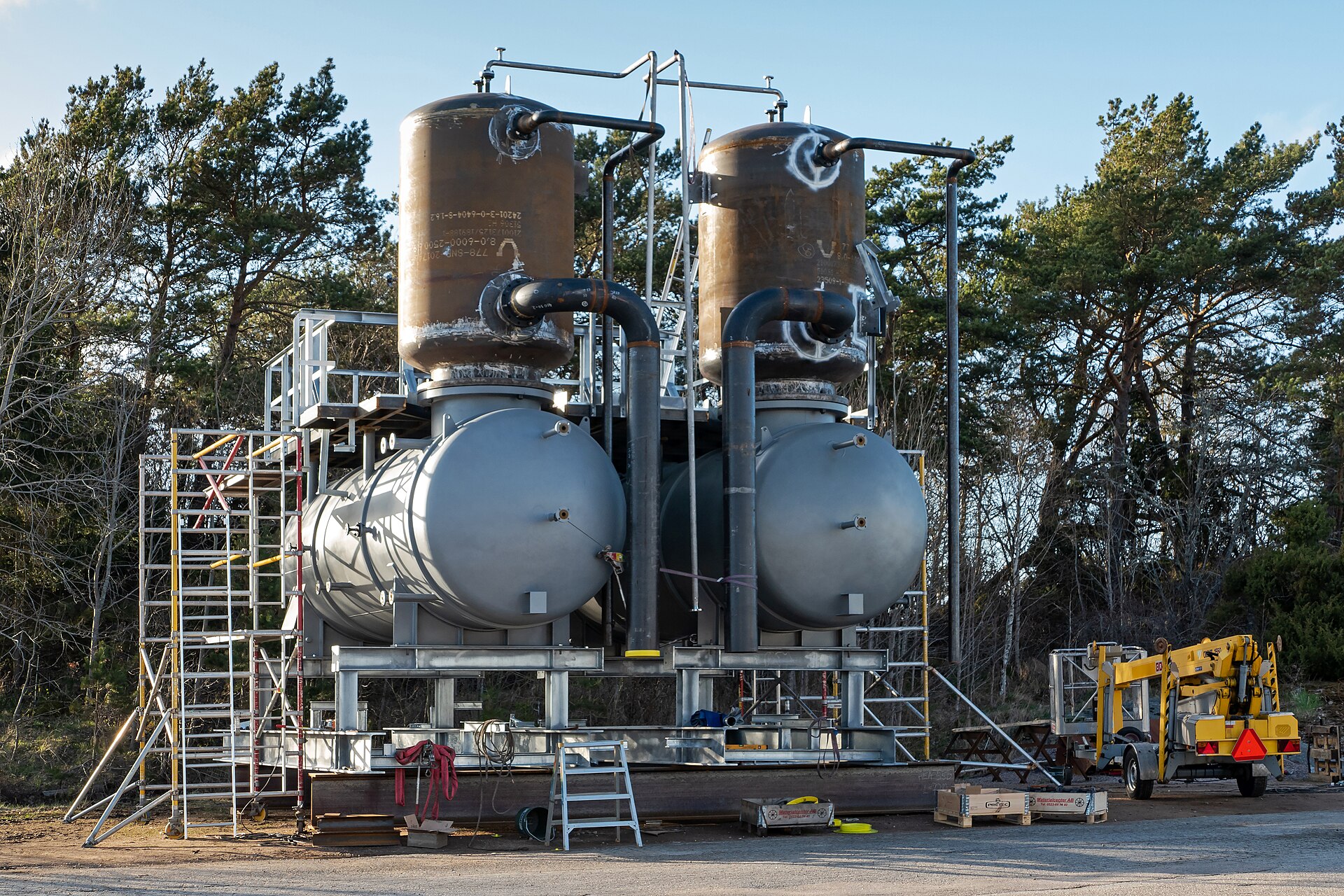
Pressure tanks under construction, with welded seams and nozzles awaiting examination
Photo: Pressure tanks under construction 3 by W.carter (Wikimedia Commons), CC0 1.0, via Wikimedia Commons.

Most API 510 candidates study NDE as a list of methods. The paper asks something harder: given what the examiner did, was it done right, and what happens to the weld now?

What does Domain III of the API 510 exam cover?

Domain III, Nondestructive Examination, has two parts. The first is ASME BPVC Section V, and the body of knowledge says the exam covers only the main body of each referenced article, except where it notes otherwise. The second is the general NDE rules in Section VIII Division 1 (UG, UW and Appendices 4, 6, 8 and 12) and in API 510 itself.

Five Section V articles are in scope. Article 1 sets the general requirements: scope, the owner/user and subcontractor responsibilities, calibration, the definitions of inspection and examination, and record keeping. Radiography is Article 2. Liquid penetrant is Article 6, with Mandatory Appendices II and III. Magnetic particle is Article 7, yoke and prod techniques only. Article 23 is limited to SE-797, thickness measurement by manual ultrasonic pulse-echo contact, and the exam points you to paragraph 7 for the procedure.
Video: API 510 The distractor on this one catch four candidates out of five. API 510 The distractor on this one catch four candidates out of five. Watch on YouTube · CertCrafter
Image: video thumbnail, source: CertCrafter on YouTube (@certcrafters).

Our channel has a short on the distractor that catches most candidates, and NDE questions are full of that pattern: three options that sound like the method, one that fits the conditions.

Which parts of each method does the exam actually name?

The body of knowledge is specific about what the inspector should be familiar with, and the wording tells you how deep to go.

For radiography, the named topics are required marking, the type, selection, number and placement of IQIs, allowable density, control of backscatter and location markers. For liquid penetrant, they are procedures, contaminants, techniques, examination, interpretation and records. For magnetic particle, they are procedures, techniques, calibration, examination and interpretation. Every method ends with documentation and record keeping.

Notice what is missing. Nothing asks you to run a scan or set up a source. The inspector reviews, supervises and decides.

How do inspectors use NDE on a real vessel?

On site, NDE usually reaches you as a report and a set of conditions. A contractor radiographs a repair weld, a technician runs penetrant on a nozzle attachment, someone takes thickness readings during a turnaround. Your job is to check the method against its rules before you trust the result.

Good inspectors ask four things in order. Was the right method chosen for the flaw being looked for? Did it follow a procedure, with calibrated equipment? Do the conditions match what the method allows? Is the record complete enough to defend later? A clean-looking report from a bad setup is worse than no report, because it gets believed.
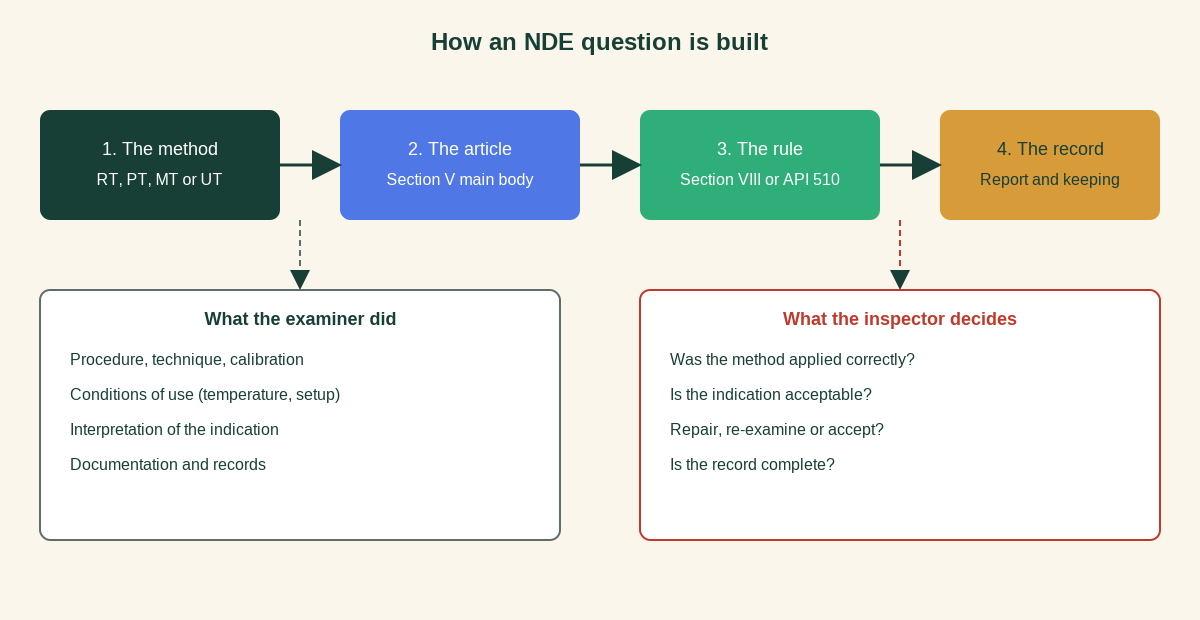
Four steps in an NDE question: the method, the Section V article, the Section VIII or API 510 rule, and the record, leading to what the examiner did and what the inspector decides
How an NDE question is built. Illustration: CertCrafter, from API 510 Body of Knowledge, September 2026 to May 2027.
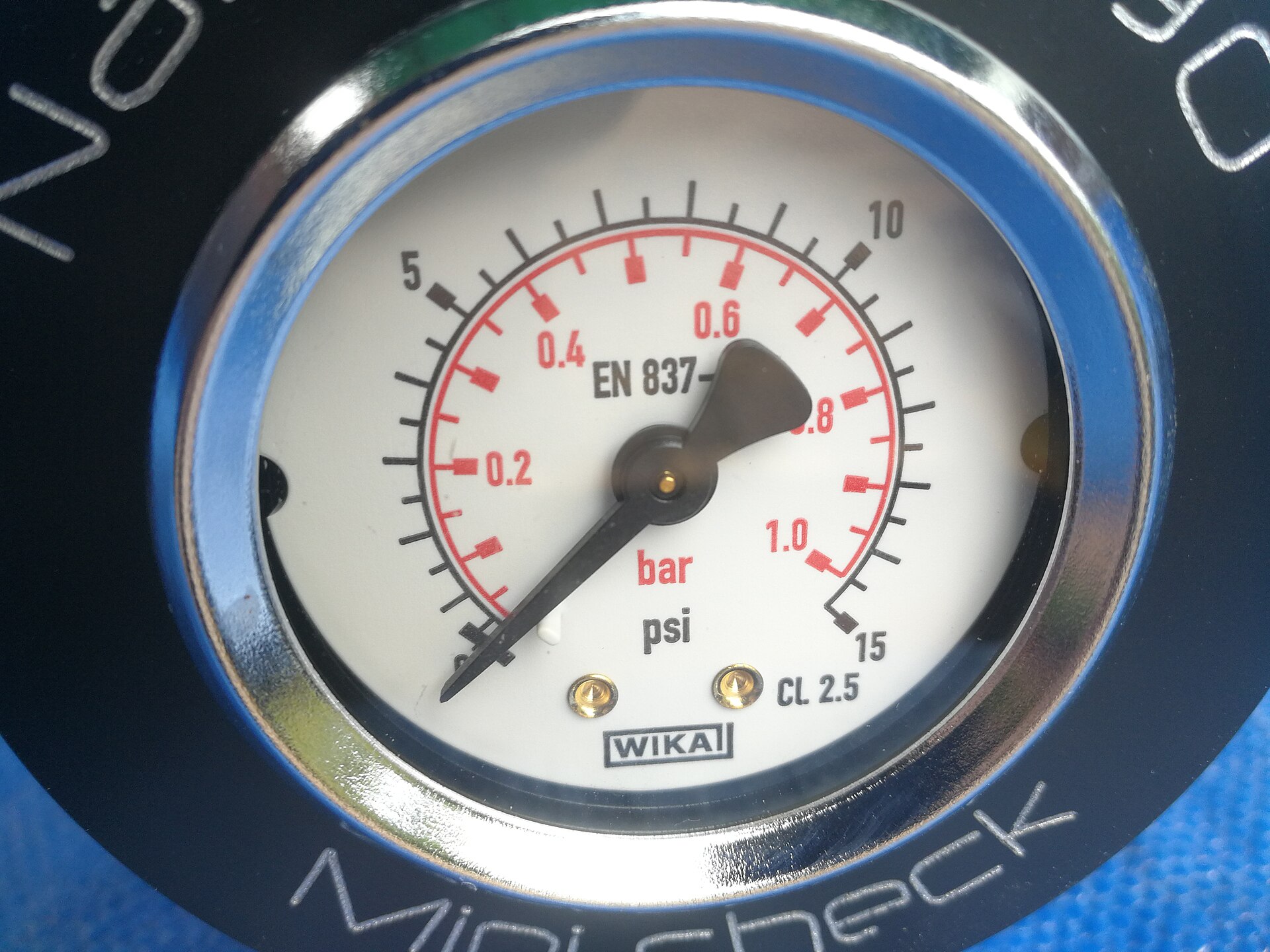
A pressure gauge on a test vessel, reading pressure during a test
Photo: Hyperbaric oxygen cell testing pot pressure gauge IMG 20201209 153847 by Pbsouthwood (Wikimedia Commons), CC BY-SA 4.0, via Wikimedia Commons.

The same habit carries to the exam. The questions are short cases with a named vessel, and the trap is usually that one condition quietly sits outside what the method allows.

What breaks each method, and what does the inspector check?

Pair every method with the one slip a question is likely to hide in it.

Method Section V article What the inspector checks Typical slip
Radiography Article 2 Marking, IQI type and placement, density, backscatter control Geometric unsharpness worked with the wrong distance
Liquid penetrant Article 6 Procedure, contaminants, technique, interpretation Surface read before the developer has had its time
Magnetic particle Article 7 Yoke or prod technique, calibration, interpretation Using a technique outside yoke and prod
Ultrasonic thickness Article 23, SE-797 Paragraph 7 procedure for pulse-echo contact readings Treating thickness readings as flaw detection

On the radiography row, geometric unsharpness is the source size times the object-to-film distance, divided by the source-to-object distance. The classic errors are dividing by the full source-to-film distance and leaving the wall thickness out of the numerator.

The API 510 Complete Exam Kit works more of these under timed conditions, with every answer explained.

Where do candidates lose marks on NDE?

Three habits cost the most.

The first is treating acceptance as a length question. Planar flaws, cracks, incomplete fusion and incomplete penetration, are rejected on radiography regardless of size. Length limits apply to rounded and elongated inclusions like slag. A short line along a fusion face looks small, and it still fails.

The second is ignoring the conditions of use. Penetrant has a standard temperature range, and an examination run below that range is a procedure problem before it is a result problem. Reading the surface the instant developer goes on is a second error in the same scenario.

The third is mixing sources. Section V tells you how to do the examination. Section VIII Division 1 and API 510 tell you what to examine and what is acceptable. Questions are written to see whether you reach for the right book.

Several are open book. The skill is finding the paragraph on screen and reading what it says.

How should you study the NDE domain?

Study by pairing each method with the one error that breaks it. For radiography, the unsharpness calculation and IQI placement. For penetrant, temperature and development time. For magnetic particle, technique and calibration. For thickness, the SE-797 procedure.

Then read the general NDE paragraphs in API 510 itself, because the body of knowledge names them directly. An inspector who knows the Section V article but not the API 510 requirement for when examination is needed will miss the question that joins them.
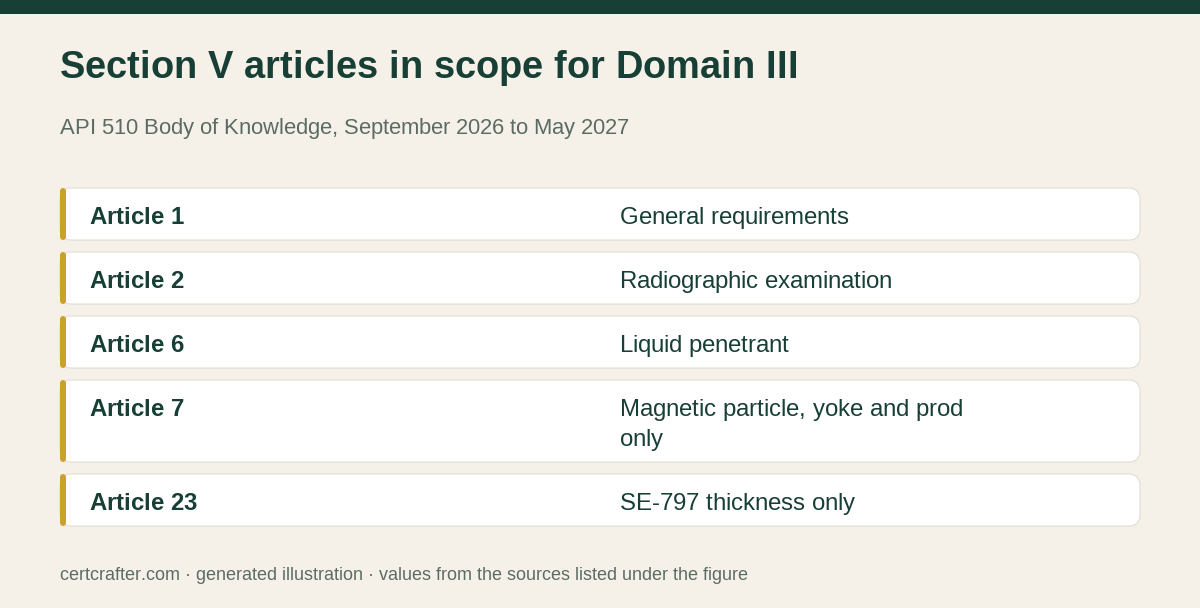
Five Section V articles in scope: Article 1 general requirements, Article 2 radiography, Article 6 liquid penetrant, Article 7 magnetic particle yoke and prod only, Article 23 SE-797 thickness only
The Section V articles in scope for Domain III. Illustration: CertCrafter, from API 510 Body of Knowledge, September 2026 to May 2027.

What to do next

Pick one method from the list above and write down, from memory, the three conditions that must hold before you accept its result. Check them against the article.

For the order of study across the five domains, the study plan lays out the sequence, and common mistakes covers errors across the paper. The API 510 Complete Exam Kit has the full course, with a free 20-question sample to see where you stand. Related guides are on the API 510 hub.

Try these free questions

  1. [Open book] A solvent removable visible penetrant examination is run on a nozzle weld at 35 F (2 C). The technician applies penetrant, waits ten minutes, wipes with a solvent dampened cloth, sprays developer and reads immediately. What should the inspector correct?

    1. The removal step, since excess penetrant must be rinsed off with water before developer is applied.
    2. The penetrant type, since only fluorescent penetrant may be used on pressure vessel welds.
    3. The temperature and the immediate reading, both of which fall outside what the method allows.
    4. The dwell time, since ten minutes floods the surface and leaves an unreadable background.
    Show the answer and explanation

    Answer: C. Two things are wrong. The examination is being run at 35 F (2 C), below the standard temperature range for penetrant examination of roughly 40 F to 125 F (5 C to 52 C), and at lower temperatures the penetrant is more viscous, so the procedure has to be qualified at the temperature of use before the results mean anything. The technician also read the surface the instant the developer went on. Developer needs its own development time for penetrant to bleed back out of a tight discontinuity, and the code sets a minimum before interpretation begins. Option 1 misstates the technique, because for a solvent removable penetrant the excess is wiped off with a clean cloth and then with a lightly dampened cloth, while a water rinse belongs to water washable systems. Option 2 invents a restriction that does not exist, since visible penetrant is acceptable on vessel welds. Option 4 attacks a dwell time that is reasonable.

  2. [Open book] A radiograph of the repair weld in the 0.75 in shell of V-1204 shows a straight dark line along one fusion face over a length of 3/16 in. The examiner reports it as incomplete fusion. Is it acceptable?

    1. Yes, since it is shorter than one third of the shell thickness
    2. Yes, if the total length of indications of this kind stays under the limit allowed for 12 in of weld
    3. Yes, if a follow up ultrasonic examination shows it is not surface breaking
    4. No, incomplete fusion is not permitted at any length in a radiographed pressure vessel weld
    Show the answer and explanation

    Answer: D. Radiographic acceptance for pressure vessel welds rejects cracks, incomplete fusion and incomplete penetration outright, with no length allowance, because these are planar flaws with sharp tips that concentrate stress and can grow under pressure and thermal cycling. Length limits exist only for rounded and elongated inclusions such as slag, which are volumetric and far less damaging. So the 3/16 in dimension has no bearing on the disposition, the character of the indication settles it, and the weld has to be excavated and rewelded. Option 1 applies a thickness related length rule that belongs to slag rather than to fusion flaws. Option 2 makes the same category error and adds an accumulated length rule from the same slag criteria. Option 3 treats a buried location as mitigating, but the criteria for these flaws do not distinguish surface breaking from subsurface, and a second examination cannot make an unacceptable flaw acceptable. The excavated area is rewelded and radiographed again.

Take the full free 10-question sample with scoring →

Frequently asked questions

Which ASME Section V articles does API 510 Domain III cover?

Articles 1, 2, 6, 7 and 23. Article 23 is limited to SE-797, the standard practice for measuring thickness by the manual ultrasonic pulse-echo contact method. The exam covers only the main body of each referenced article, except where the body of knowledge notes otherwise.

Does the API 510 exam cover every magnetic particle technique?

No. Article 7 is limited to the yoke and prod techniques. Other magnetic particle techniques are outside the body of knowledge, so spend your study time on how those two are applied and interpreted.

Is NDE tested only in Domain III?

No. Domain III is the formal home of NDE, but Domain IV lists NDE methods among its practical topics, and Domain V questions often hand you a radiograph or an indication to disposition. Expect NDE knowledge to appear across the paper.

Official sources

  1. API 510 Body of Knowledge, September 2026 to May 2027 — accessed 16 November 2026
  2. API 510 Publications Effectivity Sheet, September 2026 to May 2027 — accessed 16 November 2026
  3. API 510 Pressure Vessel Inspector, exam information — accessed 16 November 2026

Exam rules change. Check the awarding body's official page before you apply. CertCrafter is independent and is not affiliated with or endorsed by any awarding body.

Was this helpful?

Comments

    Comments are read by a person before they appear. How we moderate.