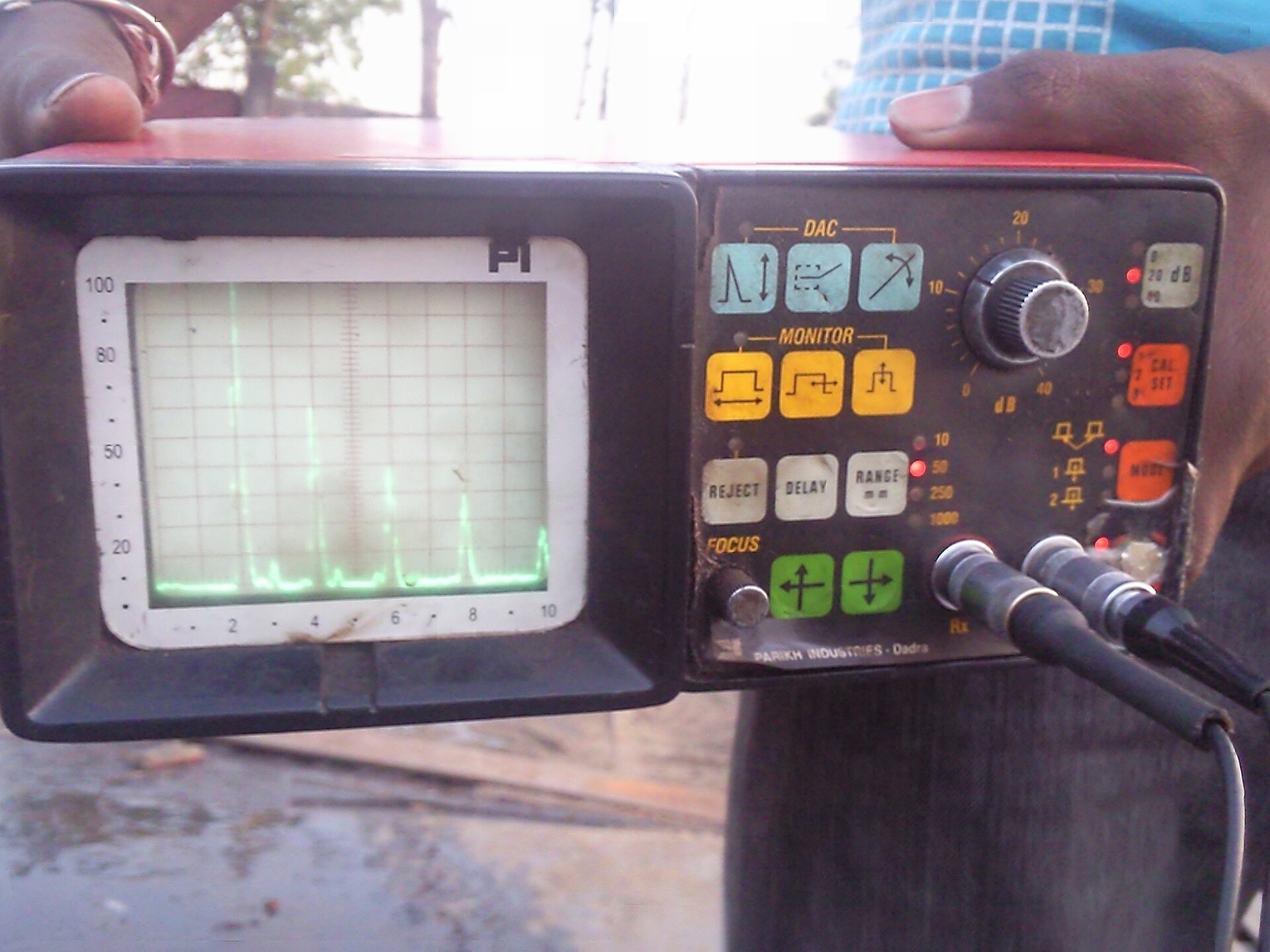
Most UT Level II candidates can recite the decibel rule and still pick the wrong gain, because the sum has two traps and the exam sets both.
What is in the ASNT UT Level II Complete Exam Kit?
The kit is built around 19 timed papers: 11 General papers of 50 questions and 8 Specific papers of 40. Each runs two hours, the length ASNT gives for its computer-based exams. Every question is tagged to one of six domains, from wave propagation to codes and safety, so a result shows where the marks went.
Around the papers you get drills by domain, question-bank practice, six chapters of study notes with 30 original figures, 40 worked calculations and flashcards. A diagnostic, a personal study plan and a readiness tracker keep the sequence honest. The questions are original, with every option explained.
Our channel has a short video on the ASNT Level II ultrasonic exam if you want to see the teaching style first.
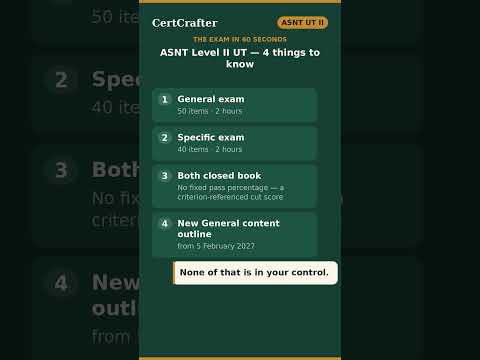 ASNT UT II — The ASNT Level II ultrasonic exam in sixty seconds. Watch on YouTube · CertCrafter
How are the ASNT NDT Level II exams laid out?
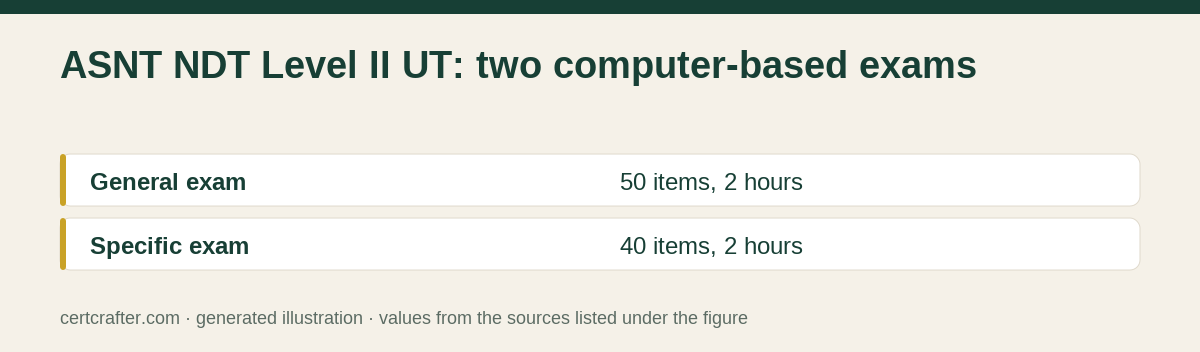
ASNT describes two computer-based, multiple-choice exams. The General exam covers the fundamentals and principles of the method. The Specific exam covers applied knowledge for general industry or pressure equipment. The General exam is 50 items in 2 hours, and the Specific exam is 40 items in 2 hours.
The practical and vision exams are not ASNT’s. Your employer carries those out under its written practice. One date matters if you are booking now: ASNT lists a revised set of UT General topics for exams after 5 February 2027, so check which outline applies to your booking. The ASNT UT Level II certification page lists the guides and practice for this exam. Our post on what changes in 2027 goes through it.
How do you set the gain from screen height?
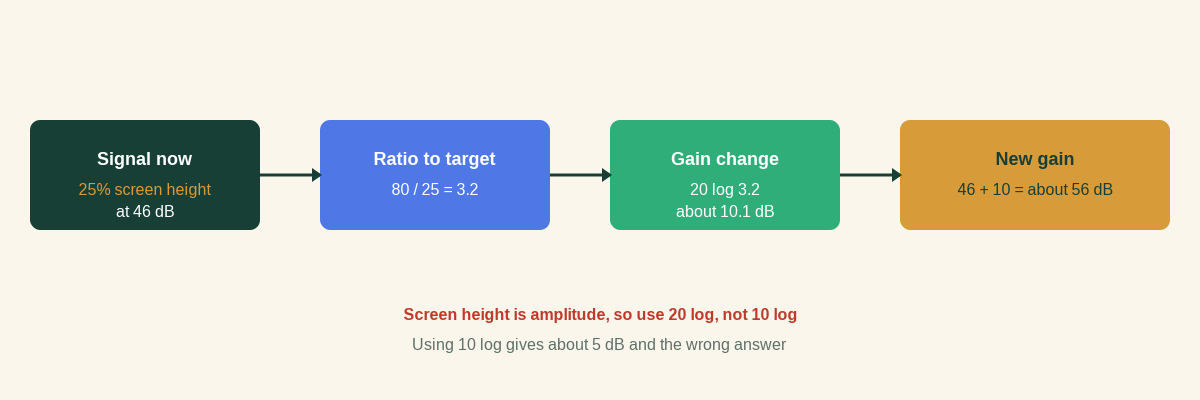
On the job, this is the step that turns a faint indication into one you can evaluate. A procedure fixes the screen height at which indications are assessed, and you raise or lower the gain until the signal sits there. Get it wrong and you size a flaw at the wrong sensitivity.
The method has three moves. Divide the target screen height by the height you have now. Take the logarithm of that ratio and multiply it by twenty, because screen height is amplitude. Add the result to the gain you started with.
Worked example: the time you really have
- The General exam gives you two hours for 50 items.
- That is under two and a half minutes an item, with no time banked for rereading.
- The Specific exam gives two hours for 40 items, so each item can take a little longer.
A decibel sum that takes four minutes at your desk is a sum you lose on the day. Pace is a skill, and only a timed paper trains it.
Where do candidates lose marks on this?
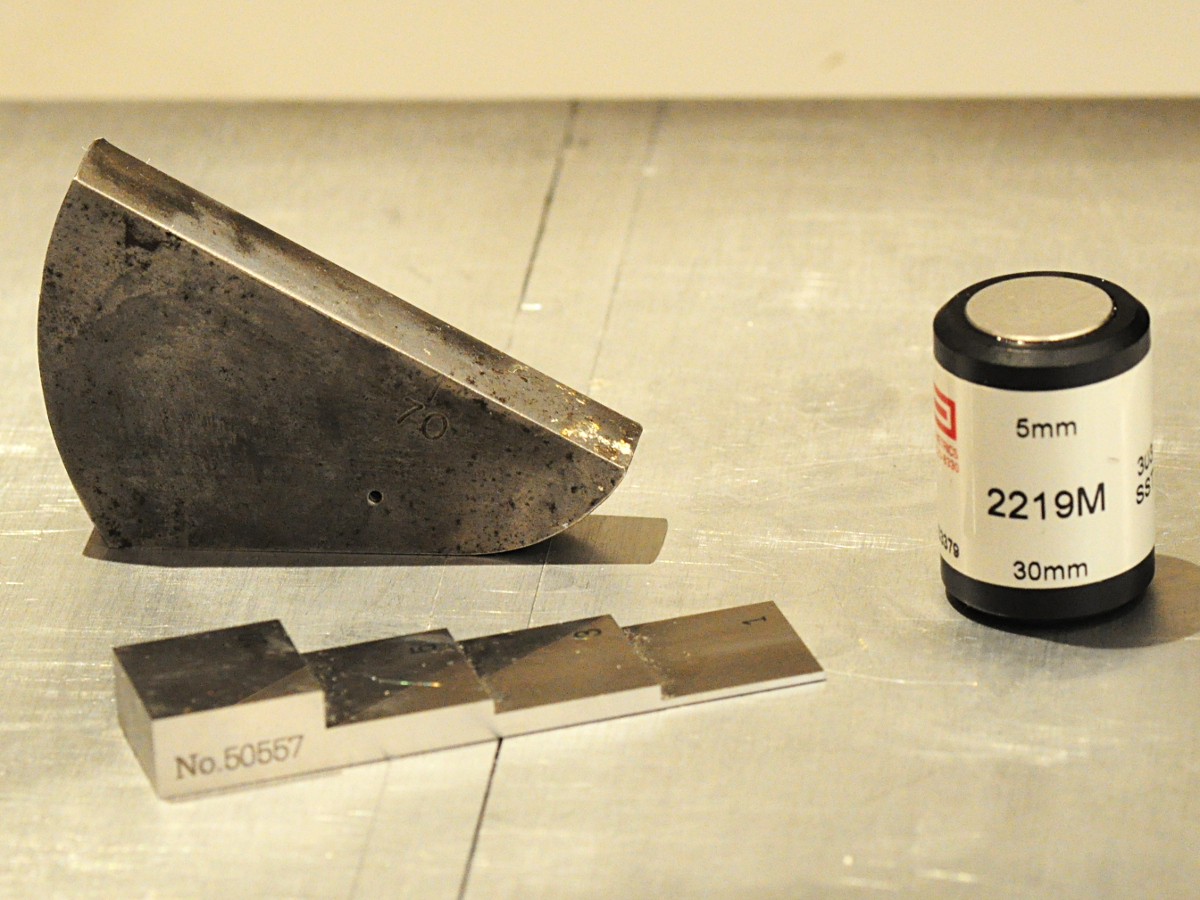
Two places. The first is using the power rule, ten times the log, on a height reading. That gives about half the right change, and the exam offers it as a wrong option. The second is scaling the gain reading in proportion to the heights, which produces an absurd figure that still looks like a calculation when you are rushing.
Under two hours for 50 items, you have time for each sum only if the method is automatic. That is what timed papers train. The ASNT UT Level II Complete Exam Kit works 40 calculations of this kind, plus drills on the traps around them. Another angle on the same topic is in UT Level II formulas with worked examples.
Is the offer worth acting on?
The festive offer runs until 31 December 2026. The box on this page shows the price at checkout and the real end date, and it disappears when the offer ends. If you have not booked an exam yet, the kit still works as a way to find your weakest domain before you do.
The ASNT UT Level II Complete Exam Kit shows its price on the page. The free sample needs no sign-in. ASNT and SNT-TC-1A are named only to describe the examinations the kit prepares for. certcrafter.com is not affiliated with ASNT, and this kit is unofficial.
Your next step: open the free sample and time yourself at two minutes a question.
Comments
Comments are read by a person before they appear. How we moderate.