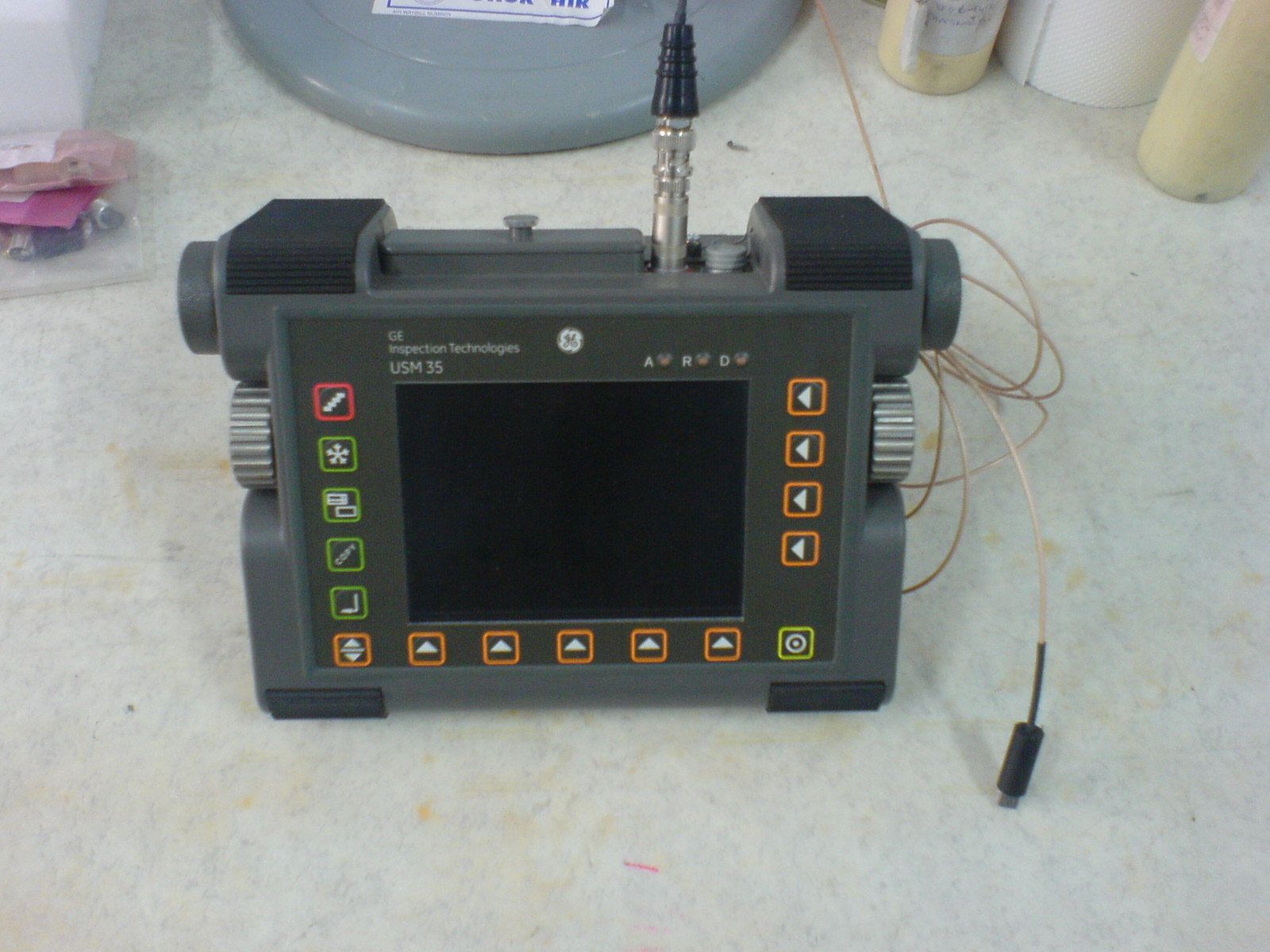
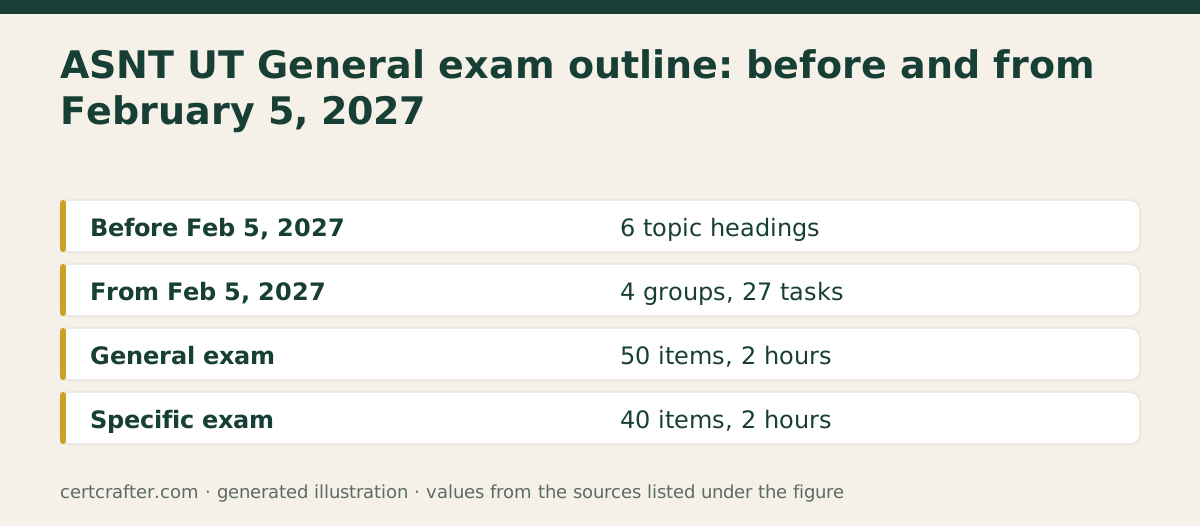
If you sit the ASNT Level II ultrasonic General exam on or after February 5, 2027, you are tested against a rewritten topic list. The old list had six headings. The new one has four groups, and under them sit 27 tasks written the way a procedure would write them.
The format does not move. ASNT shows 50 items and 2 hours for the UT General exam before the date and after it. So this is not a harder exam on paper. It is a different description of the same job, and that changes what you should practice.
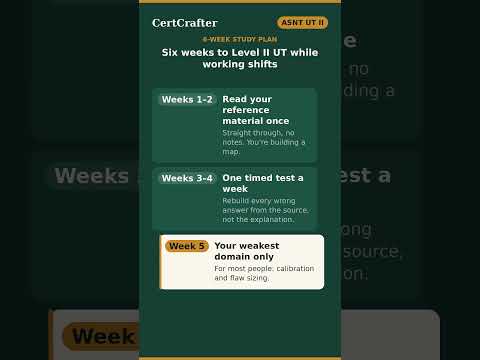 ASNT UT II — Six weeks to Level II UT while working shifts. Watch on YouTube · CertCrafter
What exactly changes in the ASNT UT exam on February 5, 2027?
Only the topic list. ASNT’s examination page shows two outlines for ultrasonic testing, one labeled prior to 5 February 2027 and one labeled after it.
The old outline is six short headings: Review of Ultrasonic Techniques, Evaluation of Base Material Product Forms, Evaluation of Weldments, Evaluation of Bonded Structures, Discontinuity Detection, and General Evaluation. Each is a subject area. None says what you do with it.
The new outline is four groups: UT Principles and Techniques, Examination of Materials and Product Forms, UT Data Collection, Interpretation, and Reporting, and UT Training, Certification, and Safety. Each carries a list of verbs. Calibrate. Select. Mitigate. Verify. Characterize. Prepare.
Which old headings went away?
Two of them have no direct twin. Evaluation of Bonded Structures is not a heading anymore, and neither are Discontinuity Detection and General Evaluation as standalone items. The detection and evaluation work now sits inside the examination and data groups, phrased as tasks you perform against a procedure.
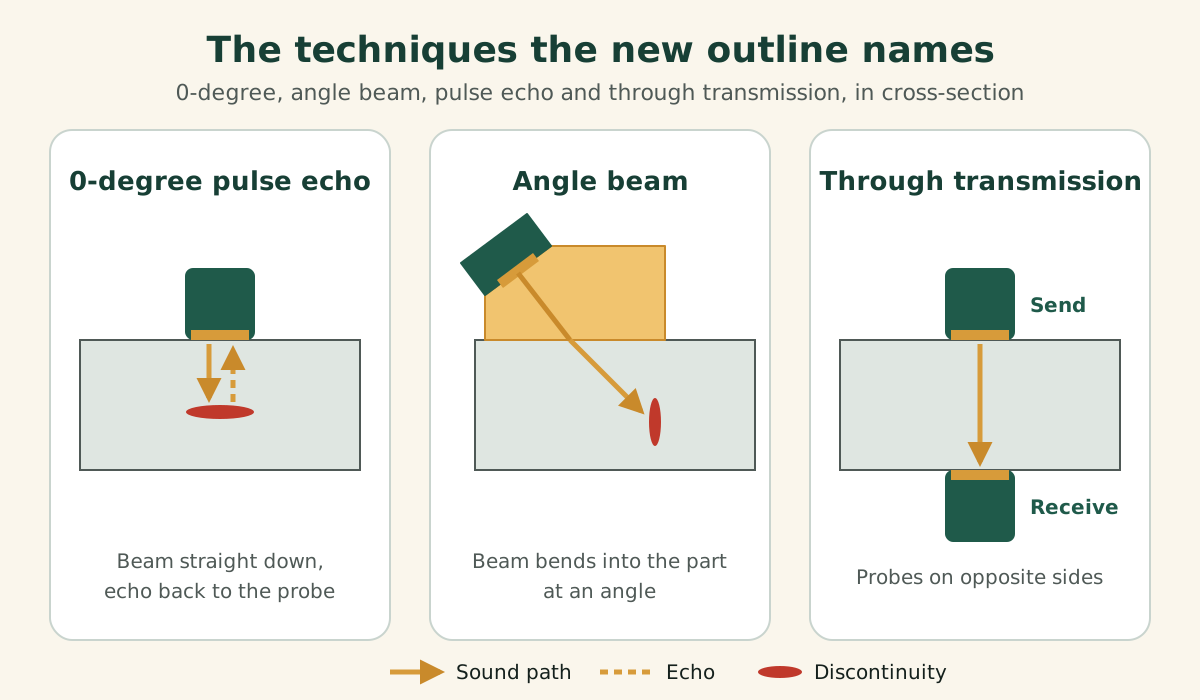
I would not read the bonded-structures heading as gone from the job. The new list names inherent, manufacturing and in-service discontinuities, with 0-degree, angle beam, pulse echo and through transmission as examples. It simply does not give bonded structures their own line.
What is in the new outline, group by group?
| Group on the new outline | Tasks listed | Sample of what it asks |
|---|---|---|
| UT Principles and Techniques | 5 | Calibrate UT systems, contact, immersion or permanently installed; select technique and equipment per procedure |
| Examination of Materials and Product Forms | 10 | Develop scan plans; assess and mitigate coatings, geometry and temperature; perform thickness measurements; examine for inherent, manufacturing and in-service discontinuities |
| UT Data Collection, Interpretation, and Reporting | 8 | Collect and verify data per procedure; interpret relevant versus non-relevant indications; characterize planar versus volumetric; evaluate against acceptance criteria; prepare documentation |
| UT Training, Certification, and Safety | 4 | Maintain certification credentials; comply with safety requirements; provide on-the-job training; administer UT tests |
Add the columns and you get 27. That is the number I would put on a study card, because it tells you the unit of study has changed. You are no longer learning a subject called weldments. You are learning to decide what to do about a weld with a painted cap and a hot surface.
Why do the verbs matter more than the nouns?
Because the old headings let you answer from a textbook, and the new tasks reward judgment.
Take the line about assessing component conditions such as coatings, geometry and temperature, and then mitigating them. A pure-recall candidate knows that couplant behaves differently on a hot surface. A candidate who can do the task knows what to change on the setup and what to write down. The exam page does not publish sample questions, so I can’t tell you how they will be phrased. What the wording tells you is the direction: situations, then a decision.
The same goes for the data group. Telling a relevant indication from a non-relevant one, and a planar flaw from a volumetric one, are interpretation skills. The list also says verify data quality per procedure requirements, which is a step many people skip when they study only the physics.
Worked example: choosing your exam date around the change
The new outline starts February 5, 2027, a little under four months away. Here is how to work it.
- Decide which outline you want. If your training was built around the old headings and you are nearly ready, an exam before February 5, 2027 uses them. If you are starting from scratch, aim for the new one and study the tasks.
- Count the application time. ASNT says to allow 2 to 4 weeks for review and processing after you submit, and you can only schedule once you have the approval letter.
- Subtract. Take the processing time off the runway, and what is left is your real study time, before you have booked a seat.
- Check your eligibility first. For UT Level II the page lists 120 days of experience in the method, 229 days in NDT in total, and 12 days of training, where one day is at least seven hours.
- Pick a date that is clearly on one side of the boundary. The page does not say which list covers February 5 itself, so do not gamble on the day.
If you can’t make the old outline, do not spend weeks cramming it. Move to the new one and plan around tasks.
What does not change?
The structure of certification. You still need a General exam and a Specific exam. The Specific exam is 40 items in 2 hours, offered for general industry or for pressure equipment sectors, and the page lists its topics as Codes, Applications and Techniques with no new date attached. Candidates can take one or both sector exams.
The employer’s part also stays put. The visual acuity exam, the practical exam and any job-specific exam under the written practice are the employer’s job, not ASNT’s. ASNT publishes no pass percentage on the pages I used, so any number you see quoted for ASNT’s cut score on a forum is not from here.
Fees are listed per method. For ultrasonic testing the initial exam is $740 for ASNT members and $820 for nonmembers. An industry sector add-on and a retake are each $370 for members and $410 for nonmembers.
How should you change your study plan?
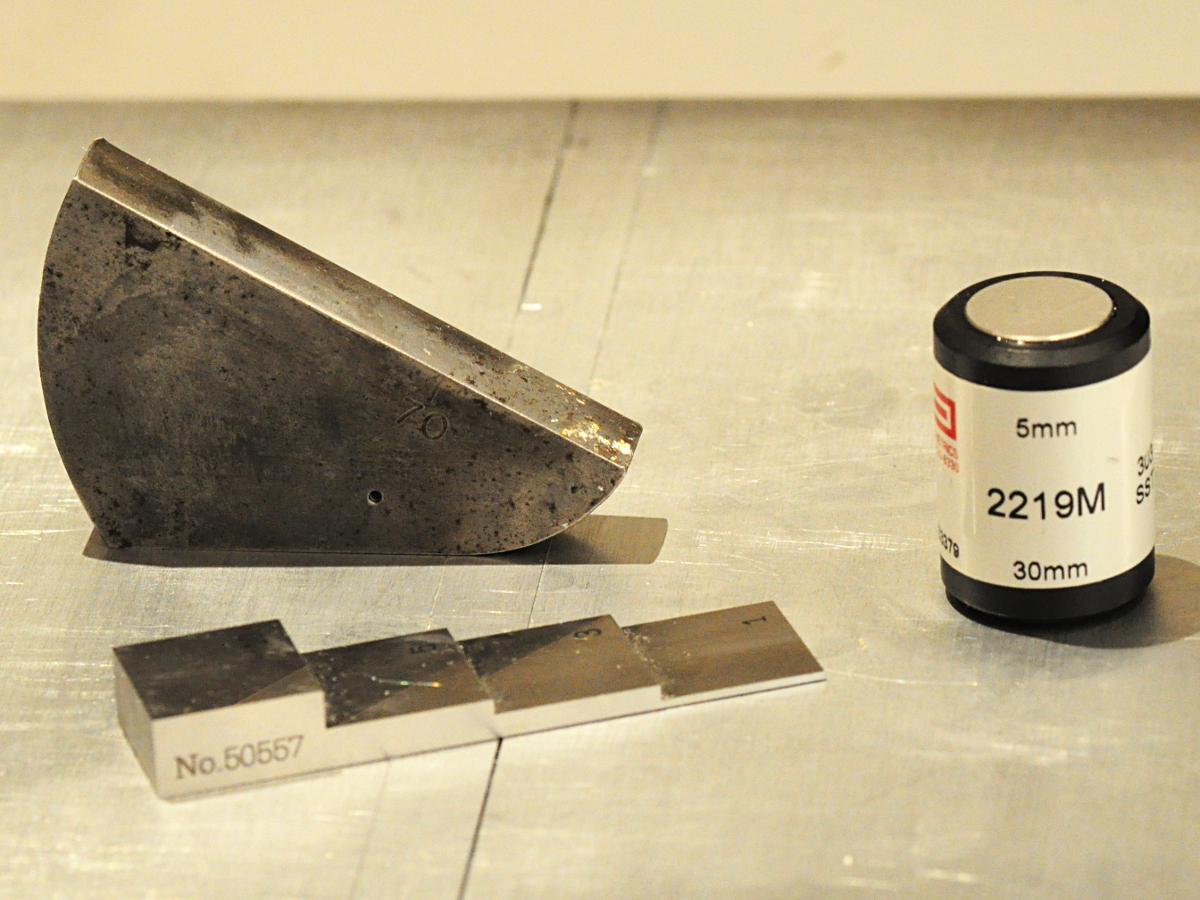
Start with the tasks you can’t do from memory. Print the 27 and mark each one green, amber or red. The reds are your first four weeks. Be honest about the amber ones too. A task you can describe but have never performed on a real part belongs in the red pile until you have done it once, even if only on a calibration block.
Then work calculations as they appear on the job. Thickness measurement with a known velocity, angle beam geometry, dB differences: they sit under the examination and principles groups now, and the numbers in a question come from a procedure, not from your memory. Our six-week shift-work plan is on the channel: Six weeks to Level II UT while working shifts.
Pair this with the scored ten-question sample to find your weak groups. Two of the free questions are on this page, one on thickness mapping and one on a restricted-access weld, because both are the kind of judgment call the new tasks describe. The full ultrasonic guide explains the two routes, ASNT central and employer SNT-TC-1A, and the study guides hub lists the rest. If you want more volume, the practice test bundle has six question banks.
Check the current topic list on ASNT’s examination page the week you book, because the dates and lists on it are what count. Then write the date on your calendar.
Comments
Comments are read by a person before they appear. How we moderate.