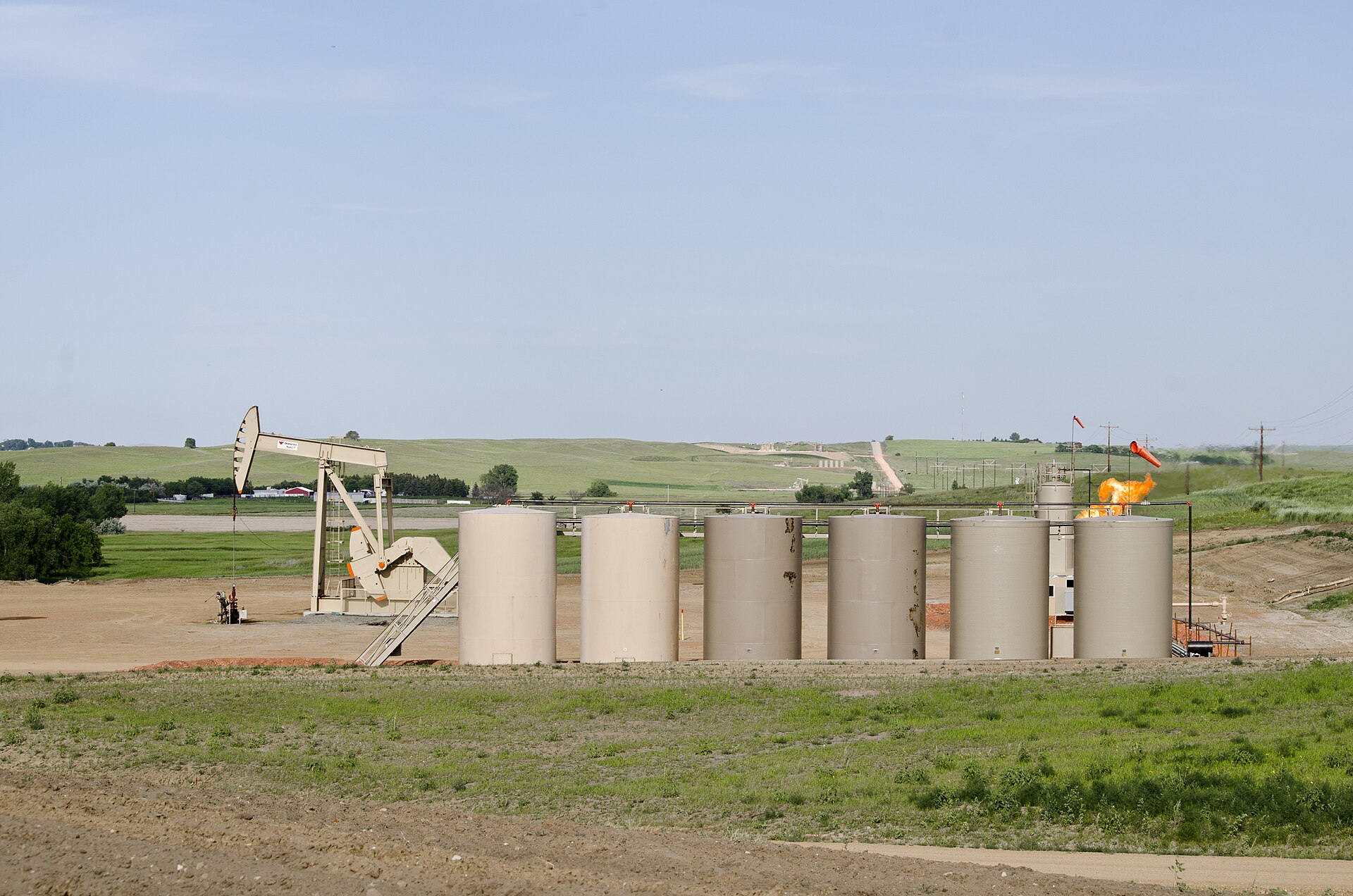
Most API 653 candidates can do the arithmetic. They lose marks on which number goes where, and the wrong options are built from exactly that slip.
Why do the inputs matter more than the formula?
Because the exam hands you much of the algebra. The body of knowledge says the maximum fill height formula and the bottom plate formulas will be provided. Corrosion rate and remaining life may be closed-book, and they are short.
What the exam cannot hand you is judgment. Is this reading from the same spot as the last one? Does the thickness belong in the shell check or the bottom check? Which pit rule applies? A question writer picks one of those decisions, puts a plausible wrong input in three options, and waits.
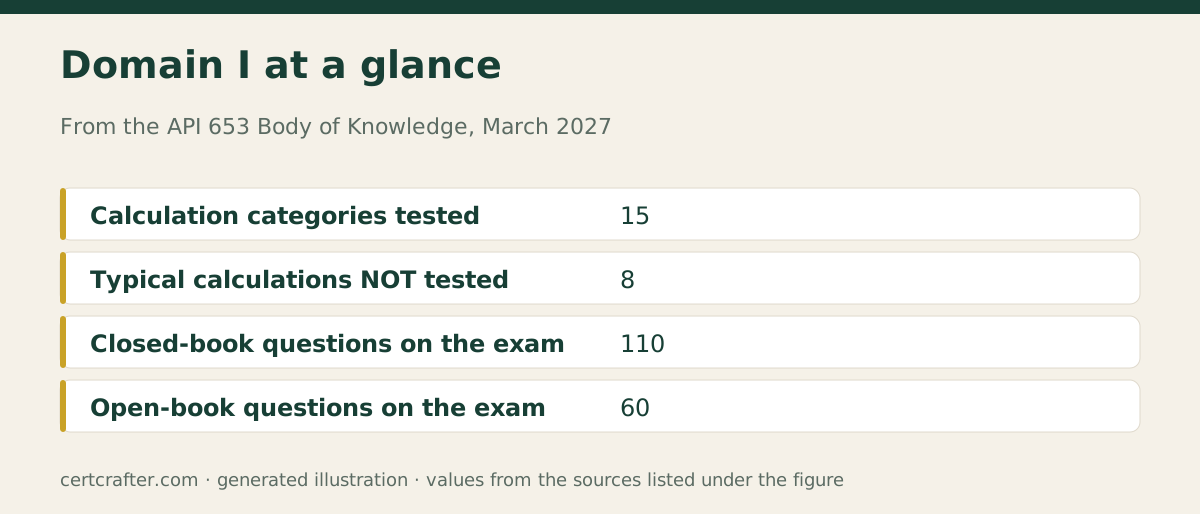
Domain I lists 15 calculation types for existing tanks, and it names eight typical code calculations you do not need to know: wind, earthquake and small internal pressure thickness, nozzle loads, flanges, brazing, venting, ladders and stairways, grillage bottoms and the variable point method. Use that list. A candidate who has spent a week on venting has spent it on nothing.
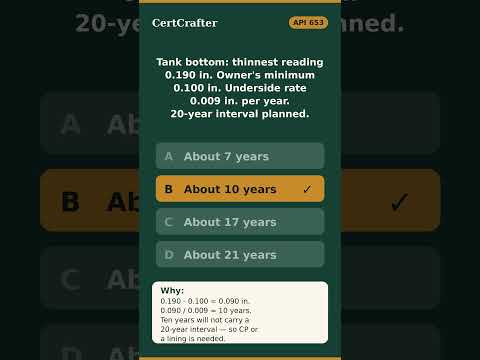 API 653 — Settlement, thickness, interval — one calculation, one number. Watch on YouTube · CertCrafter
The channel has a short that runs one calculation from settlement to thickness to interval.
What goes wrong with t2, t1 and pits?
A corroded shell area is judged with four named quantities: t2, the critical length L, the average thickness t1, and t min for the area. Pits are not part of that chain.
The body of knowledge says t2 is the minimum thickness of the corroded area, exclusive of pits. The pit gets its own test: a maximum acceptable pit depth, and a maximum length of pits in any 8 in. (200 mm) vertical length. So the trap is easy to describe. A question gives you a deep spot, a pit, and you drop it into t2 because it is the smallest number on the page.
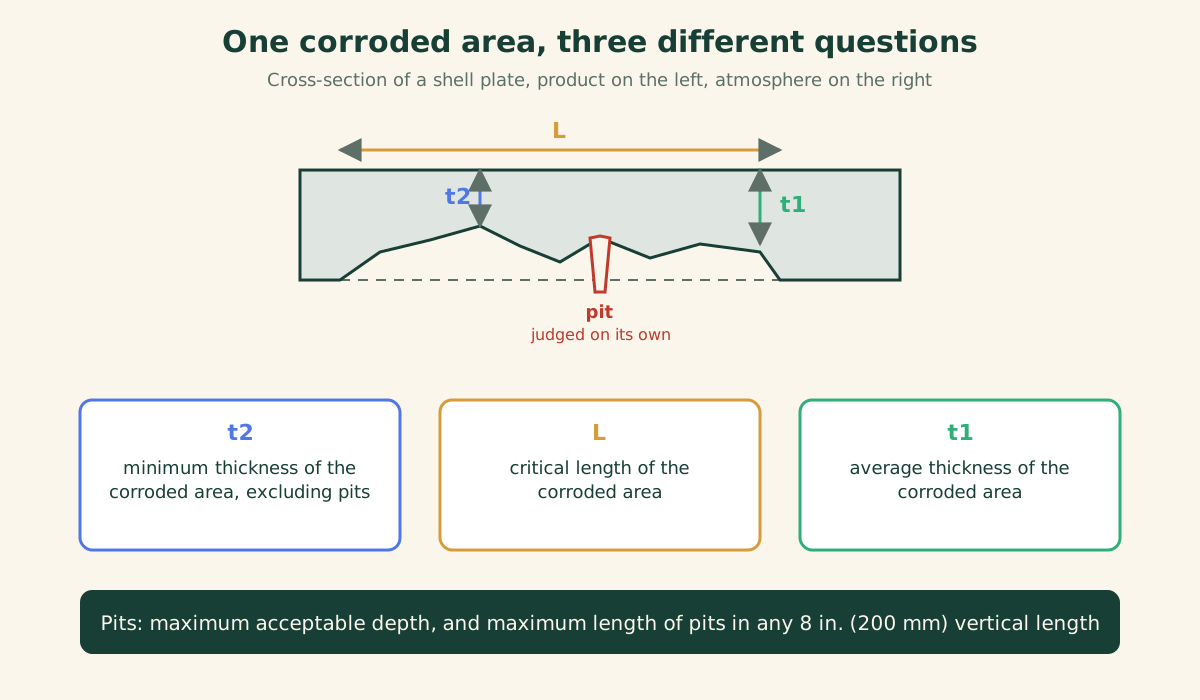
There is a second trap in the same category. H, the liquid height, and E, the joint efficiency, are based on the corroded area. They are not the tank’s highest liquid level or its best joint. A patch near the top of a course carries less head than one near the bottom, and the answer moves with it.
How does this look on a real tank?
On a job, the thin spot is rarely where the grid says it should be. A crew takes ultrasonic readings, someone flags a patch that looks bad, and then the argument starts: is that scatter, a pit, or the corroded area itself?
Good inspectors settle it before calculating. They sketch the patch, mark where the pits are, and write down which readings define the area and which are pits. That sketch is the whole trick. A report that gives a bare minimum without saying whether it includes a pit invites a query from the owner’s engineer, and a wrong call on the shell can mean a lower liquid level for the tank.
The same care applies to location. A rate needs two readings from one point, so if the thickness grid changed between inspections, the old and new numbers are not a pair. Many field errors are really filing errors.
Worked example: a corrosion allowance changes the answer
These figures are made up for practice. At one location the earlier reading was 0.470 in. and the new reading is 0.410 in., 5 years apart. The minimum allowable thickness is 0.300 in., and the problem says to hold 0.0625 in. in reserve.
- Corrosion rate:
(0.470 - 0.410) / 5 = 0.012in. per year. - Effective minimum with the reserve:
0.300 + 0.0625 = 0.3625in. - Remaining life:
(0.410 - 0.3625) / 0.012is about3.96years.
Skip step two and you get (0.410 - 0.300) / 0.012, about 9.2 years. Both look reasonable, and only one answers the question. The body of knowledge says the inspector should be able to compensate for the corrosion allowance, adding or subtracting as the problem requires. So read the last sentence of the problem before you pick up the calculator.
The API 653 Complete Exam Kit works more of these under timed conditions, with every answer explained.
Which tables and units catch people out?
Tables first. The body of knowledge says candidates may be asked about tables marked with an asterisk without access to the documents. Joint efficiency Tables 4.2a and 4.2b carry one, and the bottom plate minimum thickness tables, 4.4a and 4.4b, may be asked without access too. Open-book comfort does not help on those.
Units come next. Tanks are built to either US customary or SI units, and you must calculate in the unit the question references. API says it will include both units in the question where possible. It also warns that some tables, Tables 4.1a and 4.1b among them, appear in one unit only. Convert the readings to the table’s unit and finish the job there. Never mix systems halfway.
Last, the lookups that look like calculations. Weld sizes for shell openings, impact testing and the number of settlement survey points all come from figures and tables. The impact chain runs from design metal temperature to material group to whether testing is required to whether the values pass. Learn the order and you stop skipping a step.
How are these traps framed in the exam?
Mostly as scenarios with a tempting shortcut. One free question puts a course 1 shell below the thickness needed for the current liquid level, with the owner wanting 18 more months. The path is to re-evaluate the maximum allowable liquid level, not to rerate the tank and not to patch it with product inside. Another gives a lap patch with a short lap and a stitched fillet where the procedure on file called for a continuous one. Both findings are rejectable.
Neither question needs hard algebra. Each tests whether you know what the calculation is for.
Time matters here. The exam day is 7.5 hours with 110 closed-book questions in 2.75 hours, then 60 open-book questions in 3.75 hours. A closed-book calculation gets about a minute and a half, so a clean setup beats a clever method.
What should you do next?
Take the corroded area chain and write it from memory: t2 without pits, L, t1, H and E from the area, then t min. Next, redo one rate problem with a corrosion allowance and a unit change in the same question. If you slip, you have found your own trap.
For the wider picture, see what the calculations domain tests and the terms people mix up. The API 653 product page holds the exam facts, the full API 653 bundle has the calculation items split the way the exam splits them, the free quiz is a quick sample, and the guides hub lists the rest.
Comments
Comments are read by a person before they appear. How we moderate.