Most ASME GDTP candidates study the symbols in the order the book prints them, then hit the exam and find the marks sit somewhere else.
What should an ASME GDTP study plan be built on?
Build it on the exam, not on the chapter list. The Technologist exam is 150 questions in 4 hours, closed book, and the Y14.5 standard is not allowed in the room. You pass with 74% and at least 50% in every section. Both conditions must hold.
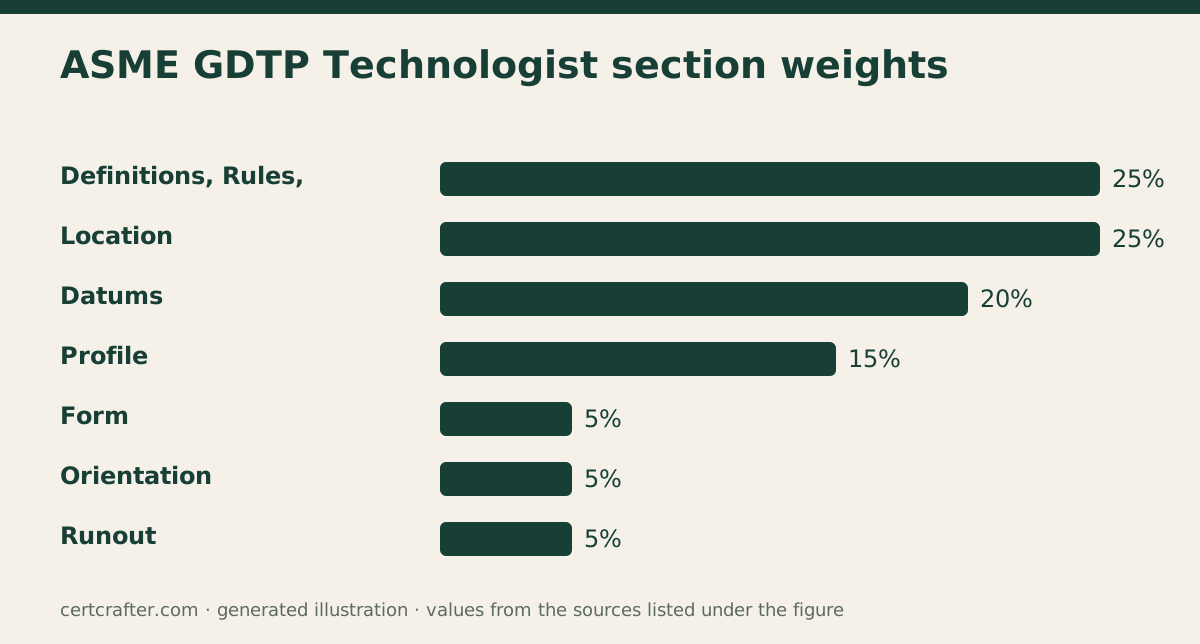
ASME publishes the section weights, which most bodies don’t. Definitions, Rules, Tolerancing and Symbology carries 25%, Location 25%, Datums 20%, Profile 15%, and Form, Orientation and Runout 5% each. Those seven numbers decide where your hours go.
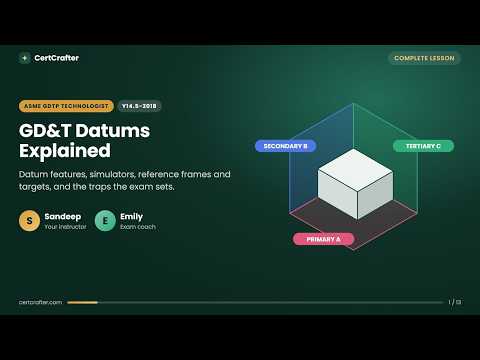 GD&T Datums Explained: Datum Features, Reference Frames and Targets (ASME GDTP Y14.5-2018) Watch on YouTube · CertCrafter
How do the four phases work?
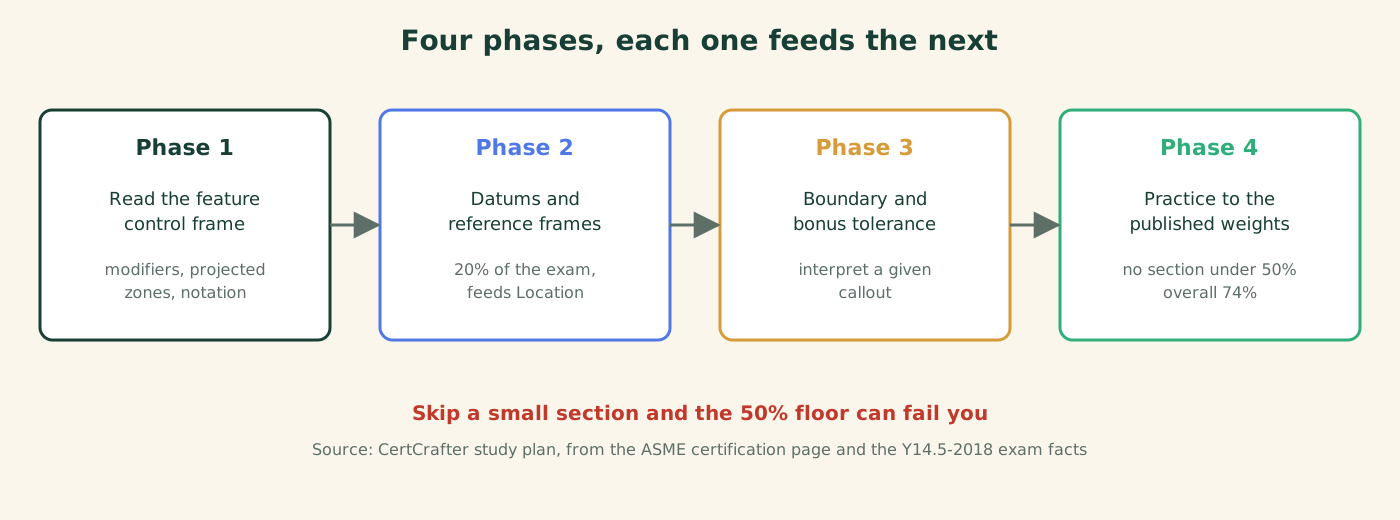
The plan has four phases. Each one makes the next cheaper.
Phase 1: read the feature control frame. Learn to read a frame as a sentence: symbol, tolerance, modifiers, datum references in order. Include material condition modifiers, projected tolerance zones, unequally disposed profile and continuous feature notation. A fluent reader saves minutes on every question, and there are 150 of them.
Phase 2: datums and reference frames. Work until degrees of freedom are automatic. This section carries 20%, and it sits underneath most Location questions too. Our video on datum features, reference frames and targets is a good way into it.
Phase 3: boundary and bonus tolerance calculations. These stay inside Technologist scope because you interpret a given callout; you don’t choose the control. That is the line between this exam and the Senior one.
Phase 4: practice to the published weights. Time your sets, score them by section, and spend the next session on the section that came out lowest.
Where should the hours go?
Weight is not the same as difficulty, so use both columns.
| Section | Weight | How to treat it |
|---|---|---|
| Definitions, Rules, Tolerancing and Symbology | 25% | Phases 1 and 3, daily reading practice |
| Location | 25% | Needs Phase 2 first |
| Datums | 20% | Phase 2, the longest single block |
| Profile | 15% | Zones and how they are counted |
| Form, Orientation, Runout | 5% each | Short, regular sessions |
How does this look on a real job?
Everyone who touches a drawing reads the same frame: the designer who wrote it, the machinist who sets up the part and the inspector who checks it. ASME’s page lists CAD designers, CNC operators, quality inspectors and CMM operators among the people the Technologist level is for. If you work in one of those roles, use your own drawings. Pick a part you handled this month and read every frame on it aloud, datum by datum.
The typical field mistake is fixture design. A part is located on the wrong feature because someone read a datum symbol as a surface when it was an axis. Phase 2 prevents that, and it prevents the same slip in the exam.
Worked example: bonus tolerance in Phase 3
A drawing calls a position tolerance on a hole at maximum material condition. You measure the hole and find it larger than its smallest permitted size.
- Find maximum material condition for a hole. That is the smallest size.
- Bonus is the departure from that size: the measured size minus the smallest size.
- Add the bonus to the tolerance stated in the frame. The sum is the position tolerance available to that hole.
Candidates lose the mark by starting from the largest size, which treats a hole like a pin. If the frame carried no modifier, there would be no bonus at all, and the stated tolerance would stand. Try it with numbers from a drawing at your own desk, then check the result against a gauge built to the virtual condition.
The ASME GDTP Complete Exam Kit works more cases like this one under timed conditions, with every answer explained.
Where do candidates go wrong in the plan itself?
Three habits show up again and again.
The first is spending all the time on the big sections. With a 50% floor in every section, a bad result on a 5% block can fail you even when the total clears 74%. Give Form, Orientation and Runout short, regular sessions, not none.
The second is studying from a 2009 syllabus. The 78% pass mark that circulates belongs to the older exam; the Y14.5-2018 Technologist exam is passed at 74%. Concentricity and symmetry were removed as tolerance types in Y14.5-2018, so they now show up only as wrong options. Our guide to the most common mistakes covers more of these.
The third is learning the Senior material. The Technologist exam tests reading and interpreting drawings. Selecting controls is Senior work.
How are the questions framed?
A question gives you a callout and asks what it permits, which datum is primary, or what total tolerance is available at a given size. It rarely asks you to design anything. So practice by reading, not by recalling definitions. The rules and symbology guide covers the largest block in detail.
What does the plan cost and how long do you have?
ASME’s page lists the 2018 Technologist application at $395, with no experience requirement. After approval you have 180 days to schedule the exam at a Prometric center. Certificates expire three years from the date of issue. Start the clock when you buy, not before.
Your next step: write down the seven weights, pick the section where you’d score lowest today, and read one frame from your own drawings in that area before you close this page. Then take the free set on the quiz page, and see the certification guide, the practice test bundle and the hub of guides.
Comments
Comments are read by a person before they appear. How we moderate.