A Margin of Safety Worked Like a Checker Would Want It
One tension fitting, the Part 25 factors applied in the right order, and the margin a checker accepts. Airframe Stress Analysis Vol. 1 is free on Kindle.
In short
- A margin of safety compares the allowable with the design load: limit load times the ultimate factor of 1.5, times any special factor such as the 1.15 fitting factor.
- In the worked fitting below the net-section margin is +0.35, but a checker would still ask about bearing, shear-out and the lug modes.
- Practical Airframe Stress Analysis, Volume 1 is free on Kindle for five days during the promotion.
Volume 1 is free on Kindle right now, for a few days only, and the fastest way to see whether it is worth your library space is one worked example. Here is a fitting margin done the way the book does every one of its 85.
The fitting
A machined tension fitting carries a limit load of 8,000 lb. At the critical section it is 1.5 in wide and 0.25 in thick, with a 0.375 in bolt hole through it. The material’s ultimate tensile allowable is 66 ksi. All of these are illustrative values.
The factors, in order
The design ultimate load starts from the limit load times the factor of safety of 1.5, which gives 12,000 lb. Because this part is a fitting, the fitting factor of 1.15 applies on top, so the load the section must carry is 12,000 × 1.15 = 13,800 lb. The mistake checkers see most often is stacking a further factor that already covers the same uncertainty; Volume 1 has a section on exactly which factors overlap.
The section and its allowable
The net area across the hole is (1.5 − 0.375) × 0.25 = 0.281 in². At 66 ksi that section carries 0.281 × 66,000 ≈ 18,560 lb.
The margin
The margin of safety is the allowable over the design load, minus one: 18,560 / 13,800 − 1 = +0.35. A positive margin, and a comfortable one.
What the checker asks next
A good checker does not sign off on that number alone. Net-section tension is one mode. The hole also loads the fitting in bearing and in shear-out, and if the end of the fitting is a lug, the lug’s own failure modes decide the part more often than the plain section does. The checker will also ask where 8,000 lb came from: which load case, and whether the free-body diagram of the fitting balances. In the book every worked example ends with that list of questions, because that is what turns a calculation into substantiation.
How it looks on the page
In a stress report the same calculation takes a few lines: the load case and its source, the factors with their regulation references, the section property, the allowable with its basis, and the margin. A reviewer should be able to check each line without opening another document. Volume 1 shows that layout for every example, so the free copy doubles as a template for your next report, whether you are new to the stress office or checking someone else’s work.
What else is inside
Volume 1 has 26 chapters on metallic structure: margins and the Part 25 factors, material allowables, beams and thin-walled sections, columns, plate buckling and crippling, stiffened panels, diagonal tension webs, lugs and pins, fastened joints, fittings, and fatigue and damage tolerance for the static analyst. It closes with writing a stress report that passes review and a capstone fitting taken from loads to report.
All four books in the promotion
-
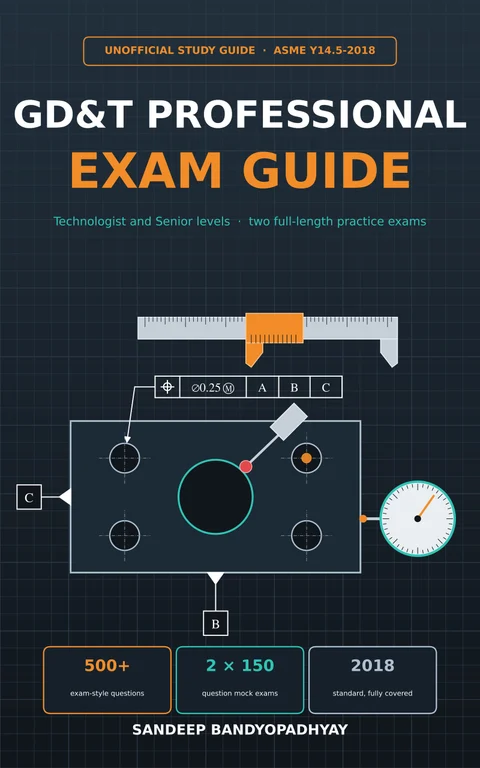 GD&T Professional Exam Guide Get it free on Kindle Kindle ebook on Amazon
-
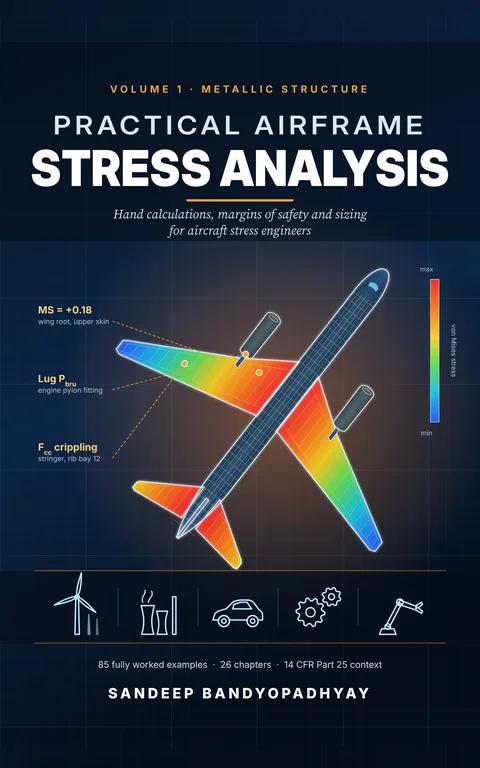 Practical Airframe Stress Analysis, Vol. 1 Get it free on Kindle Kindle ebook on Amazon
-
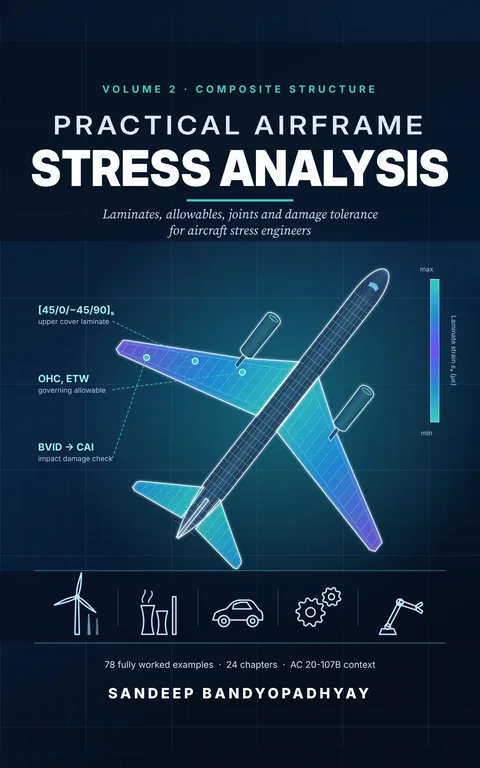 Practical Airframe Stress Analysis, Vol. 2 Get it free on Kindle Kindle ebook on Amazon
-
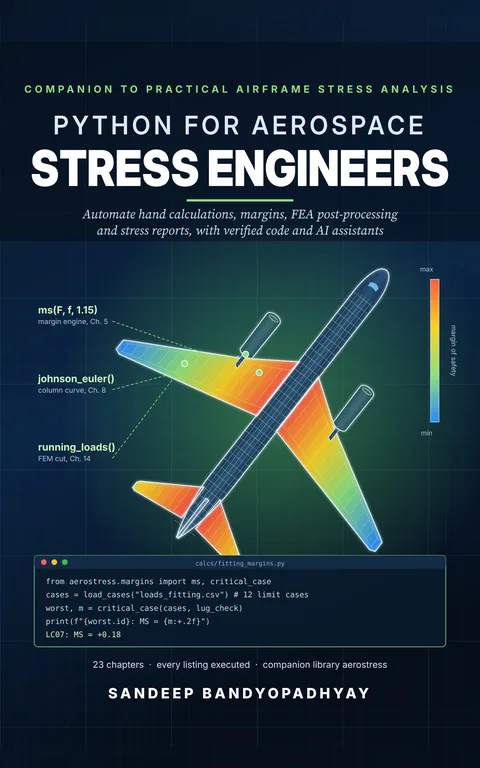 Python for Aerospace Stress Engineers Get it free on Kindle Kindle ebook on Amazon
Read more
The book’s card, the paperback and the free reader’s companion with a quiz for each chapter are on the books page, and there is a longer introduction to Volume 1. All the posts of this promotion are on the announcements page.
Frequently asked questions
Where do the 1.5 and 1.15 factors come from?
The factor of safety of 1.5 is in 14 CFR 25.303 and the fitting factor of 1.15 in 14 CFR 25.625. Volume 1 explains when each applies and how not to stack factors that already overlap.
Is the Kindle ebook really free?
Yes, while the promotion runs, in every Amazon store that sells Kindle ebooks. Afterwards it returns to its paid price. The paperback is not discounted.
Are the numbers in the example design data?
No. They are illustrative values chosen to show the method. On a program, your company's allowables and methods govern.
- #stress analysis
- #margin of safety
- #fittings
- #14 CFR Part 25
- #Kindle
Get new articles by email
New exam guides, changes to exam dates and fees, and new practice-test certifications. One short email a day at most, only when there is something new.
Was this helpful?
Related articles
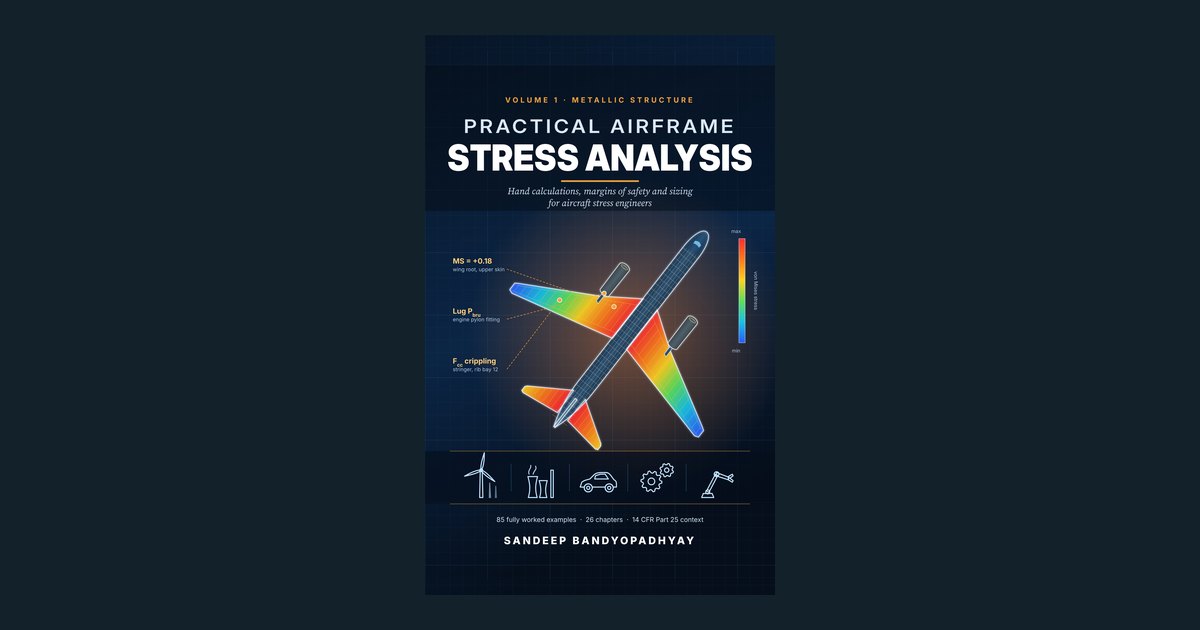
Airframe Stress Analysis Vol. 1: Free Kindle Promotion
Practical Airframe Stress Analysis, Volume 1 is free on Kindle for five days: metallic structure by hand calculation, 26 chapters and 85 worked examples.
Practical Airframe Stress Analysis, Volume 1: Metallic Structure
A desk handbook for aircraft stress engineers: hand calculations, margins of safety and sizing of metallic airframe structure, 85 worked examples.
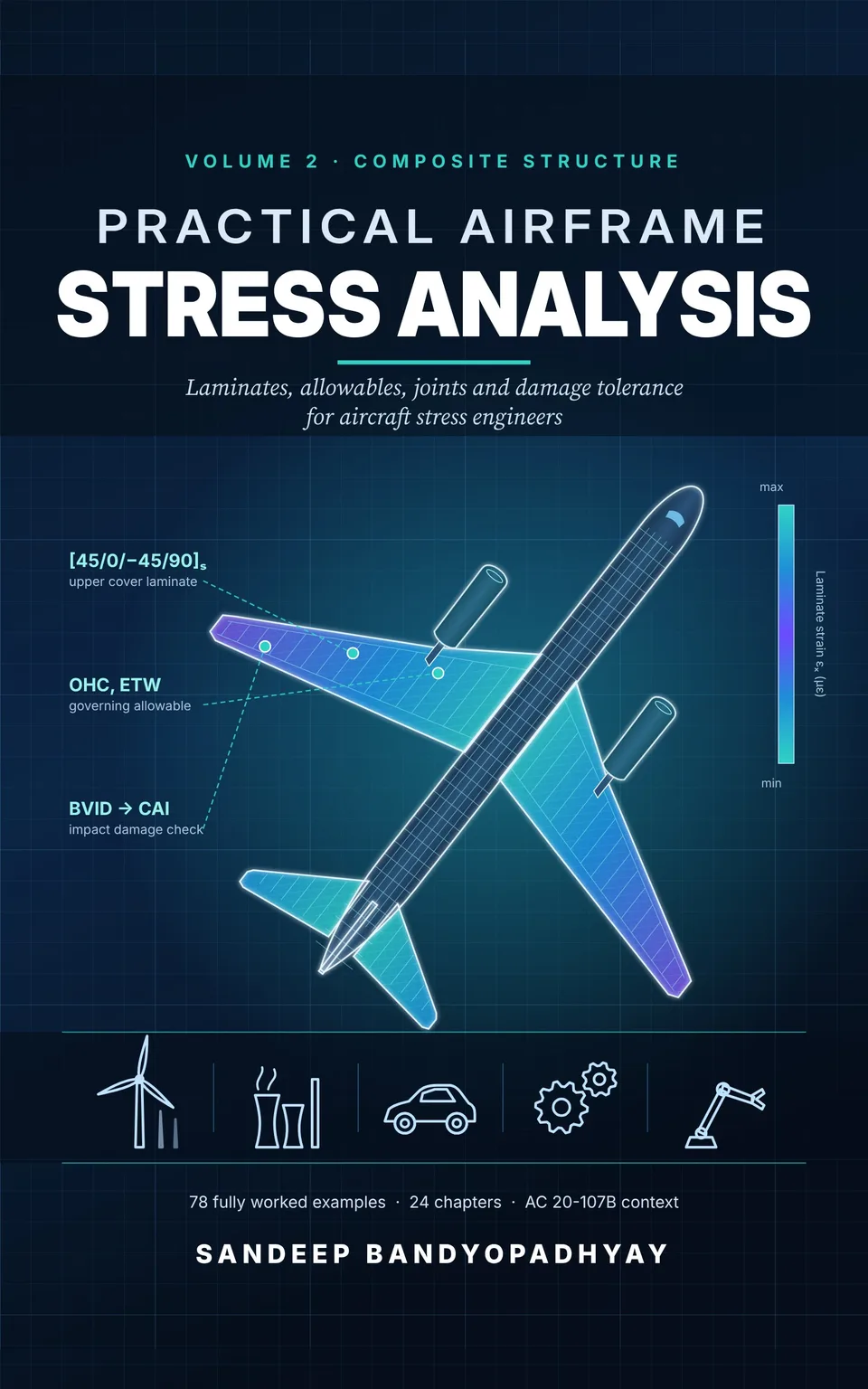
Airframe Stress Analysis Vol. 2: Free Kindle Promotion
The composite volume of Practical Airframe Stress Analysis is free on Kindle for five days: laminates, allowables, joints, damage tolerance, 78 examples.
Comments
Comments are read by a person before they appear. How we moderate.