The API 510 exam structure, explained properly
170 questions, two sessions, a scaled pass mark and a reference set that changes. What the API 510 exam actually asks of you.
In short
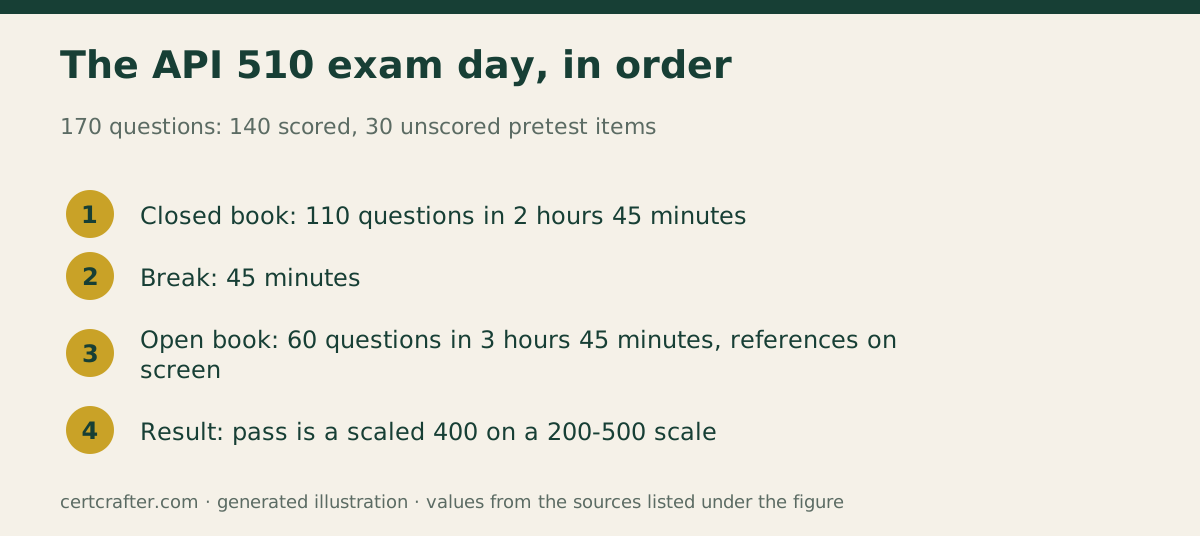
- API 510 has 170 questions, of which 140 are scored and 30 are unscored pretest items that are not identified.
- The exam splits into 110 closed-book questions in 2 hours 45 minutes and 60 open-book questions in 3 hours 45 minutes, with a 45-minute break between.
- Passing is a scaled score of 400 on a 200-500 scale. API publishes no percentage equivalent.
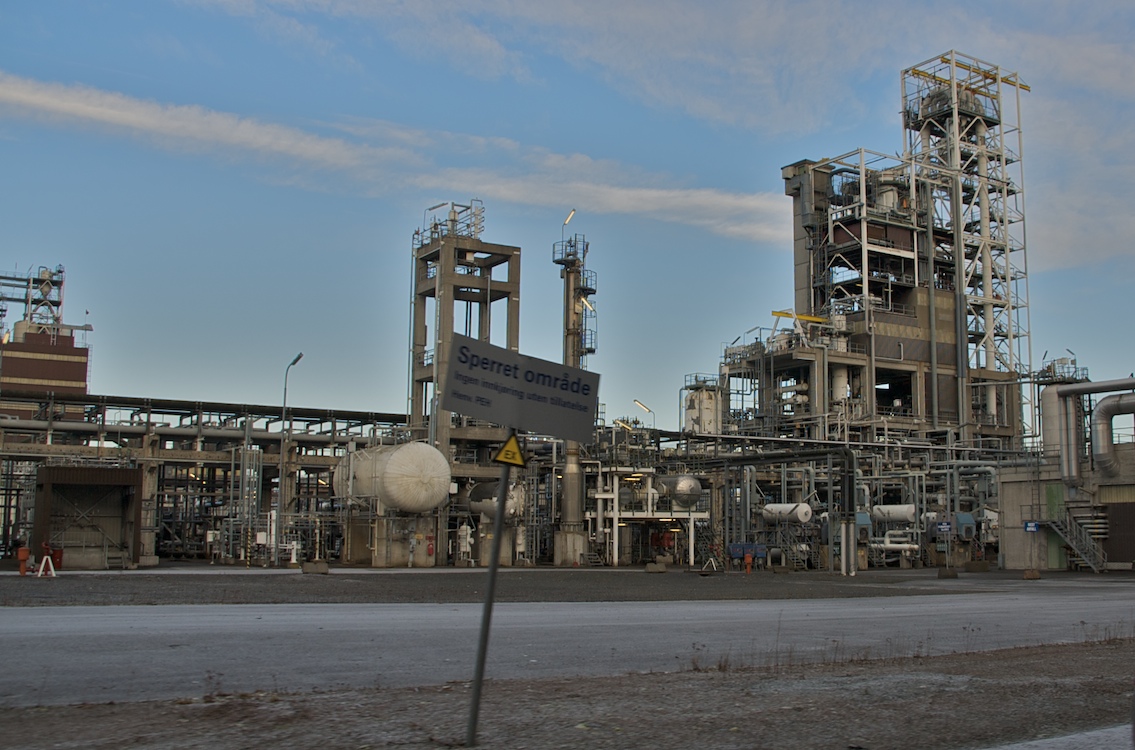
- The exam is delivered in person at Prometric, with references supplied as on-screen PDFs rather than your own paper copies.
Candidates lose marks on API 510 for reasons that have nothing to do with pressure vessels. They mismanage a two-session structure they had not rehearsed, or they prepared against last year’s code editions. Both are avoidable.
How is the API 510 exam structured?
The exam runs as two sessions in a single day:
| Session | Questions | Time | Books |
|---|---|---|---|
| First | 110 | 2 h 45 min | Closed |
| Break | , | 45 min | , |
| Second | 60 | 3 h 45 min | Open |
That is 170 questions across roughly seven and a half hours including the break.
The asymmetry is deliberate and worth reading carefully. The closed-book session gives you about 90 seconds per question. The open-book session gives you nearly four minutes. That is not generosity, it reflects that open-book questions require you to locate a requirement in a reference set and apply it, which takes time.
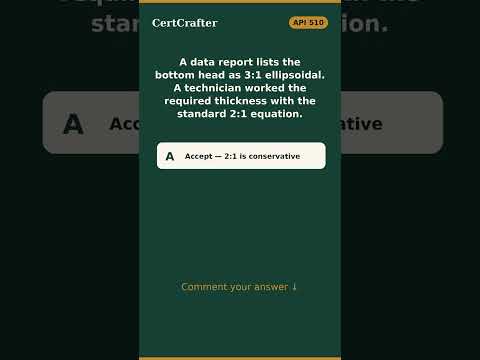 API 510 — Three millimetres of allowance, a quarter mill a year. Now the interval. Watch on YouTube · CertCrafter
 Which questions actually count?
140 of the 170 are scored. The remaining 30 are unscored pretest items that API uses to trial future questions.
They are not identified. You cannot tell which is which, so the only rational approach is to answer everything as though it counts. There is no penalty for a wrong answer, so leaving anything blank is strictly worse than guessing.
How is API 510 scored?
Passing is a scaled score of 400 on a 200-500 scale.
Scaled scoring maps raw scores onto a fixed range so that candidates sitting a marginally harder form are not disadvantaged. The consequence is that the raw number of correct answers required varies between forms, and API does not publish it.
This means any statement of the form “you need 70% to pass API 510” is not a rough guide, it is unsupported. Nobody outside API knows the raw cut score for a given form.
For practice purposes, treat 70-75% on well-built material as a readiness signal, while understanding it is your benchmark and not API’s standard.
What is in scope?
The Body of Knowledge covers five areas:
- Thickness Measurements, Inspection Intervals and Vessel Integrity
- Welding Procedure and Qualification Evaluation
- Nondestructive Examination
- Practical Knowledge. General
- Practical Knowledge. Specific
API publishes these section names but does not publish percentage weights for them. Any vendor quoting an exact split has estimated it. A reasonable estimate can be inferred from the 110/60 structure, general practical knowledge dominates the closed-book session, while the technical sections divide the open-book questions, but it remains an estimate and should be described as one.
The reference set changes, and it matters
This is where preparation most often goes stale.
API publishes an effectivity sheet for each exam window, listing exactly which documents and which editions are in scope. Those editions move.
For the September 4-25 2026, January 2-22 2027 and May 7-28 2027 windows, the sheet lists API 510 11th Edition with Errata 1 and 2, together with the 2025 editions of ASME BPVC Sections V, VIII Division 1 and IX, plus the relevant API recommended practices and specified ASME PCC-2 articles.
Two practical consequences:
- Check the sheet for your own window before you buy anything. Material written to a superseded edition will teach you requirements that no longer apply.
- The in-scope portions matter as much as the document names. The sheet often scopes particular articles or sections rather than an entire code.
Preparing for the closed-book session
The closed-book session rewards two things: fluent recall of the calculation methods, and familiarity with the damage mechanisms.
Formulas you should be able to reproduce cold, in both US customary and SI units:
- Corrosion rate, long-term and short-term
- Remaining life
- Next inspection interval, including the half-life rule
- Minimum required thickness for shells and heads
- MAWP from measured thickness
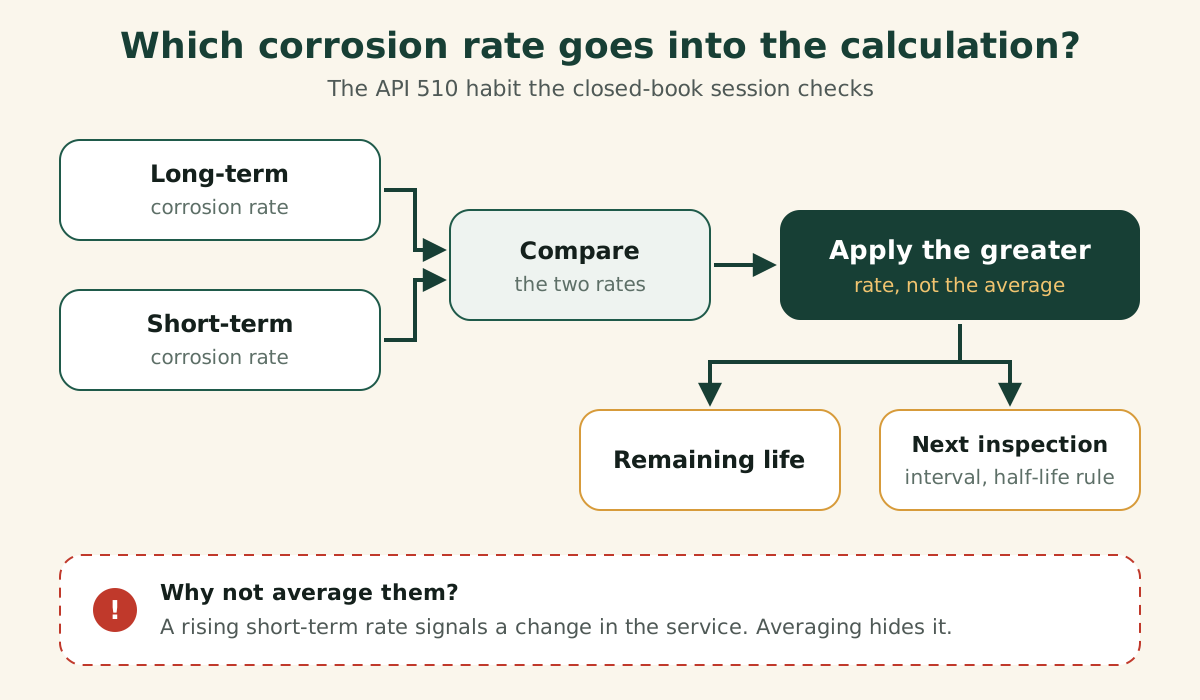
Two habits pay for themselves. First, practise in both unit systems, both are examinable, and a question bank written only in US customary leaves you exposed. Second, when a question gives you long-term and short-term corrosion rate data, remember that API 510 has you compare them and apply the greater one. A rising short-term rate signals that something in the service has changed, and averaging the two hides exactly the signal you were meant to catch.
Preparing for the open-book session
Open book is a navigation skill, not a memory skill, and it needs separate rehearsal.
The references are supplied as on-screen PDFs. If your entire preparation involved thumbing through tabbed paper copies, exam day will be slower than you expect. Practise with a digital copy and a search box.
Build a mental index rather than a memorised one: know which document answers which kind of question. Repair and alteration authorisation, examination method selection, welder qualification, and acceptance criteria all live in predictable places, and knowing which book to open is most of the battle.
A realistic preparation plan
- Weeks 1-2. Read API 510 itself end to end once. Do not attempt mastery; you are building a map.
- Weeks 3-5. Domain by domain, with closed-book retrieval after each. Write formulas from memory daily.
- Weeks 6-7. Full practice sets. Classify every error by cause: calculation, code requirement, field judgement, or misread.
- Week 8. One full timed rehearsal with the real 2:45 / break / 3:45 structure, using on-screen references only.
The timed rehearsal is the step most candidates skip and the one that most reliably changes the outcome. Seven and a half hours of sustained technical attention is itself a skill, and the first time you attempt it should not be the day it counts.
Frequently asked questions
How many questions are on the API 510 exam?
170 in total: 110 closed-book and 60 open-book. Of those, 140 are scored and 30 are unscored pretest items. The pretest items are not identified during the exam, so every question should be treated as if it counts.
What score do you need to pass API 510?
A scaled score of 400 on a 200-500 scale. API does not publish a raw percentage or a per-form cut score, so claims that you need a specific percentage are not supported by API's own documentation.
Is the API 510 exam open book?
Partly. The first session of 110 questions is closed book. After a 45-minute break, the second session of 60 questions is open book, with the reference documents supplied on screen.
Can I take API 510 remotely?
No. API 510 is administered in person at Prometric test centres.
Which code editions apply to my exam window?
That depends on the effectivity sheet for your window. For the September 2026, January 2027 and May 2027 windows, the sheet lists API 510 11th Edition with Errata 1 and 2, and the 2025 editions of ASME BPVC Sections V, VIII Division 1 and IX. Always check the sheet for your own booking.
References
- API 510 Pressure Vessel Inspector certification — American Petroleum Institute
- API ICP Publication Effectivity Sheets — American Petroleum Institute
CertCrafter is independent and is not affiliated with or endorsed by the certification bodies named above.
- #API 510
- #pressure vessel
- #inspection
- #exam structure
Practise what this article covers
Get new articles by email
New exam guides, changes to exam dates and fees, and new practice-test certifications. One short email a day at most, only when there is something new.
Was this helpful?
Related articles

API 510, 570 or 653: which should you take first?
Three API inspection certifications, one exam format, three completely different reference lists. How to choose, and why the overlap is smaller than it looks.

The API open-book session: what you can look up
Sixty questions, 3 h 45 min, references on screen only. What the open half of an API inspection exam actually asks, and why it is not the easy half.
LPIC-3 305-300: what the virtualisation exam expects
60 questions in 90 minutes, scaled 200-800 with a pass at 500, covering KVM, Xen, containers and provisioning. What to study and in what order.
Comments
Comments are read by a person before they appear. How we moderate.