Are AI and data certifications worth taking in 2026?
AI credentials multiplied faster than the standards behind them. How to tell a rigorous data certification from a badge with a marketing budget.

In short
- Vendor certifications test a specific platform; body-of-knowledge certifications test transferable principles. Neither is better in the abstract, they answer different questions.
- A credential with no published body of knowledge, no proctoring and no expiry is closer to a course certificate than a certification.
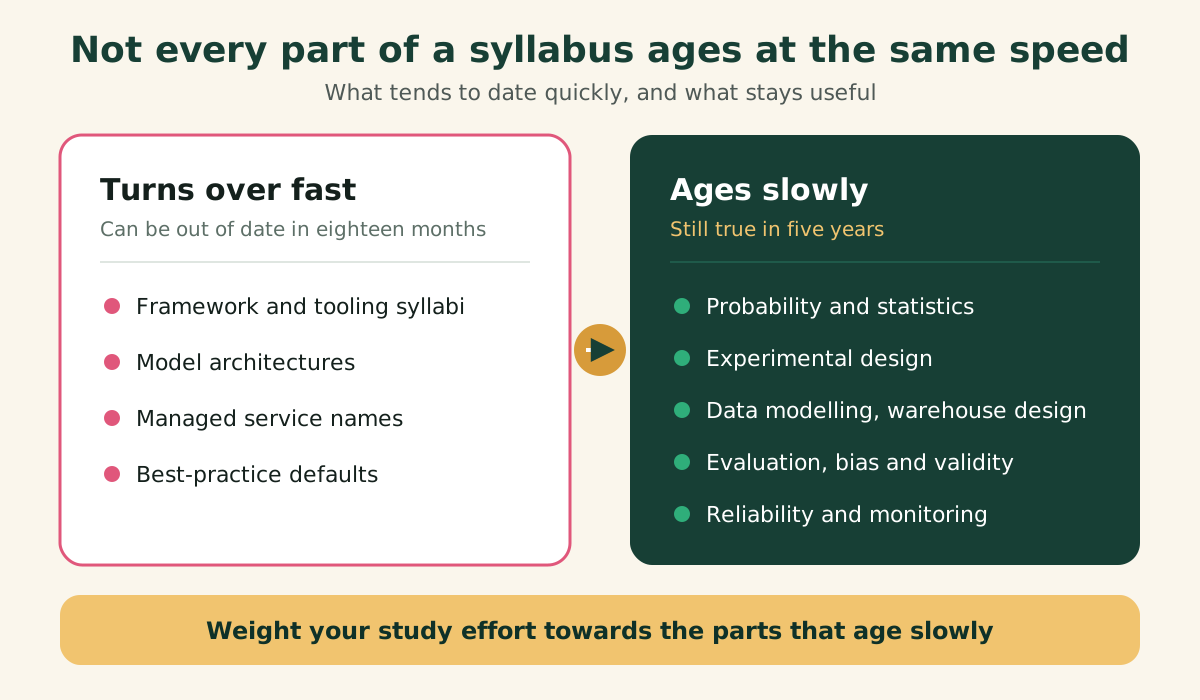
- Foundational statistics and data modelling age far more slowly than framework-specific syllabi, which can turn over in eighteen months.
- Check whether the exam is proctored and whether it expires. Both are proxies for whether employers treat the credential as verification.
The number of AI and data credentials grew faster between 2023 and 2026 than the standards bodies behind them could plausibly have grown. Some are rigorous. Many are course completion certificates wearing the vocabulary of certification.
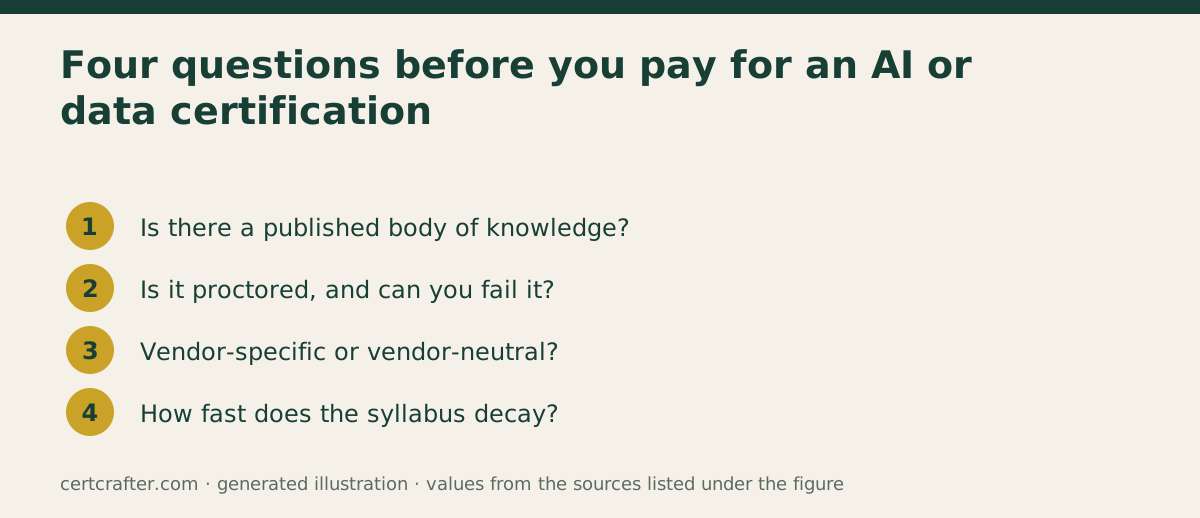
Telling them apart is a practical skill, and it is mostly a matter of asking four questions.
What separates a certification from a certificate?
The distinction is not pedantic, it changes what the credential is worth in a hiring conversation.
A certification typically has:
- a published body of knowledge written by a standards body or vendor, independent of any single course
- an exam you can fail, sat under proctoring
- an expiry or recertification requirement
- a register an employer can check
A certificate of completion has none of those. It confirms you finished a course. That is a real thing and worth listing, but it is evidence of effort rather than verification of competence, and describing it as a certification on a CV invites an awkward interview moment.
 PMP Risk Management Explained: Register, Responses, Reserves and Risk vs Issue (2026 Exam) Watch on YouTube · CertCrafter
 Question 1: is there a published body of knowledge?
This is the fastest filter. A genuine certification publishes what it tests, independent of any particular training product. ASQ does this for its credentials. Microsoft publishes skills-measured documents for its role-based exams and revises them on a stated schedule.
If the only description of what the exam covers is the syllabus of the course that sells it, the credential and the course are the same product. That is not necessarily bad, it may be an excellent course, but it is not third-party verification of anything.
Question 2: is it proctored, and can you fail it?
An unproctored, unlimited-retake, 80%-to-pass quiz at the end of a video series is not an assessment in any meaningful sense.
Proctoring is a decent proxy for seriousness. It costs the issuing body money and it costs candidates convenience, and organisations only accept both when the credential is meant to certify rather than to market.
Question 3: vendor-specific or vendor-neutral?
Both are legitimate; they answer different questions.
Vendor certifications. Microsoft, AWS, Google Cloud, test a specific platform. They map directly onto daily work if your organisation runs that stack, and hiring managers in those shops read them fluently. Their weakness is portability: deep Azure ML knowledge transfers to a Google Cloud team only in part.
Vendor-neutral certifications test principles: statistics, experimental design, data modelling, reliability. They transfer across employers and outlive tooling changes, but they say less about whether you can ship on a particular platform tomorrow.
The pragmatic answer for most engineers is one of each: the vendor credential for the stack you actually work in, and a principles-based credential that survives the next migration.

Question 4: how fast does the syllabus decay?
This is where AI credentials differ sharply from, say, pressure vessel inspection.
API 510’s underlying code changes on a multi-year cycle. A machine learning tooling syllabus can be materially out of date in eighteen months. Model architectures, managed service names and best-practice defaults all move quickly.
The practical consequence is not “avoid AI certifications”, it is weight your effort towards the parts that age slowly:
- Probability, statistics and experimental design
- Data modelling and warehouse design
- Evaluation methodology, bias and validity
- Reliability and monitoring of deployed systems
These are the components that will still be true in five years, and they are also the components most commonly weak in self-taught practitioners.
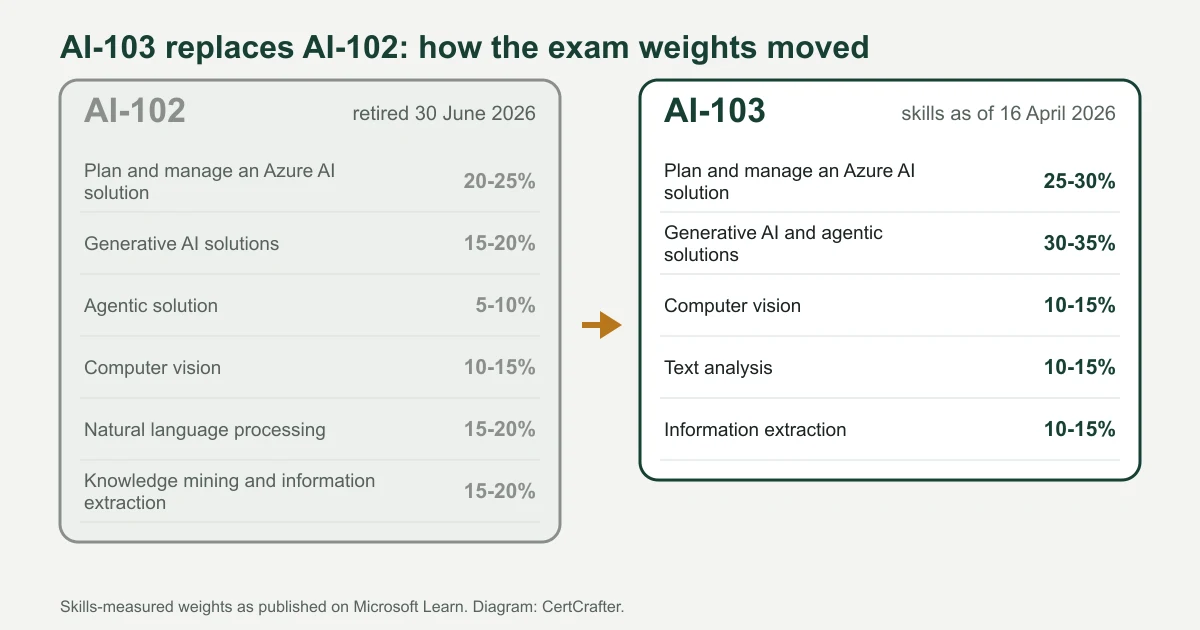
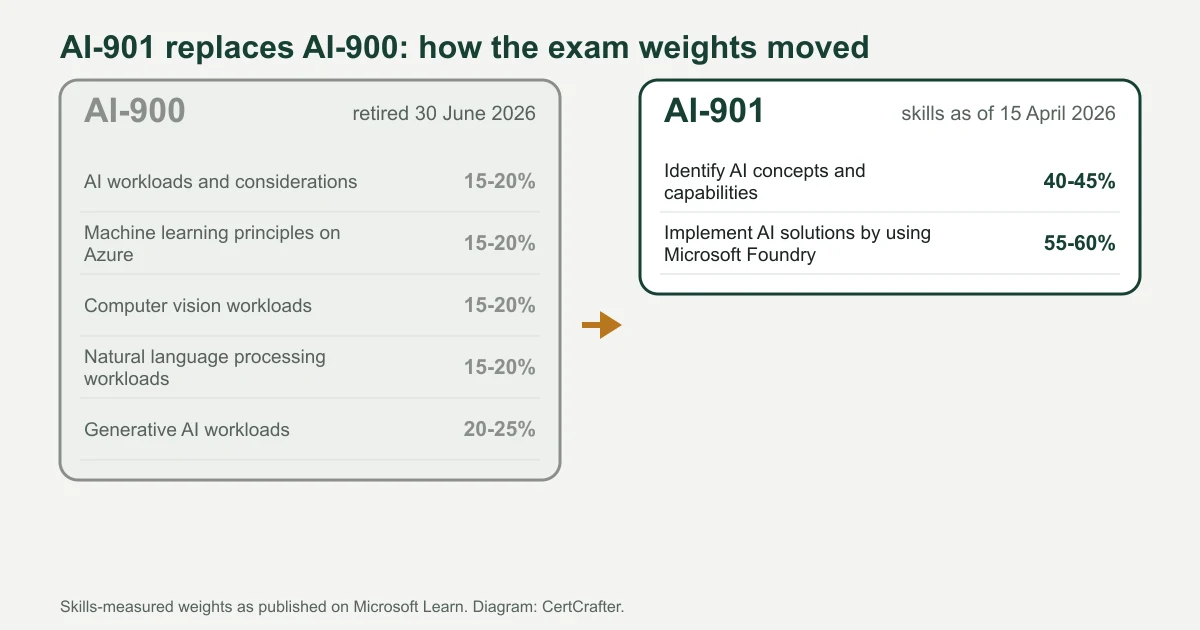
Microsoft’s 2026 changes show how fast this happens. AI-900, AI-102 and AZ-204 all retired between June and July 2026, and their successors test different skills: see how AI-901 replaces AI-900, how AI-103 replaces AI-102 and how AI-200 replaces AZ-204.
What a certification does and does not do for a career
Being honest about this matters more than any individual recommendation.
What it does: gets a CV past an initial filter; provides a structured syllabus when you are otherwise learning haphazardly; signals to a current employer that you are investing; occasionally satisfies a contractual or procurement requirement.
What it does not do: substitute for demonstrable work. In every technical hiring process, the portfolio and the interview decide the outcome. A credential that gets you into the room does not carry you through it.
The candidates who get the most out of certification are those who treat the syllabus as a curriculum, building something real against each domain as they study, rather than as a list of facts to survive until exam day.
A reasonable path
If you are starting from a general engineering or analytics background:
- Establish statistical foundations first. They underpin everything else and decay slowest.
- Add the vendor credential for the platform you actually use. The one your employer runs, not the one with the best marketing.
- Build something against each domain as you study. A model you evaluated properly teaches more than the module on evaluation.
- Recertify deliberately. If a credential expires and you no longer work in that area, letting it lapse is a legitimate choice rather than a failure.
The credential is a means of structuring learning and signalling it. Where it stops being useful is the point at which candidates study for the badge rather than the competence, and that is visible from the other side of an interview table almost immediately.
Frequently asked questions
Do employers actually value AI certifications?
They value them as evidence of structured knowledge, not as a substitute for demonstrable work. In hiring, a certification most often functions as a filter that gets a CV read, after which portfolio and interview performance decide the outcome. That makes a rigorous, proctored credential worth considerably more than an unproctored badge.
Should I choose a vendor certification or a vendor-neutral one?
It depends on where you work. If your organisation runs on one cloud platform, that vendor's credential maps directly onto daily work and is usually the faster payoff. If you expect to move between stacks, a vendor-neutral credential built on a published body of knowledge transfers better.
How quickly do AI certifications go out of date?
Framework and tooling syllabi turn over quickly, sometimes within eighteen months. Statistical foundations, experimental design and data modelling change far more slowly. Weight your effort accordingly.
Is an unproctored certificate worthless?
Not worthless, but it is evidence of completion rather than verification of competence, and experienced hiring managers read it that way. Describe it accurately on a CV as a course completion rather than a certification.
References
- Microsoft Certified: Azure AI Engineer Associate — Microsoft Learn
- ASQ Certified Reliability Engineer Body of Knowledge — American Society for Quality
CertCrafter is independent and is not affiliated with or endorsed by the certification bodies named above.
- #AI certification
- #data engineering
- #career
- #credential quality
Practise what this article covers
Get new articles by email
New exam guides, changes to exam dates and fees, and new practice-test certifications. One short email a day at most, only when there is something new.
Was this helpful?
Related articles
AI-103 Replaces AI-102: What Changed for AI Engineers
AI-102 retired in June 2026 and AI-103 now covers the Azure AI engineer role. Compare the domains, the new agent skills, and a 6-week plan to prepare well.
AI-901 Replaces AI-900: What Changed in 2026
AI-901 replaces AI-900 with a Foundry-heavy, Python-aware exam. See the new domains, what was dropped, and a 4-week plan to prepare with confidence.

What blueprint-aligned practice tests actually mean
Most practice tests are written to a topic list, not an exam blueprint. Here is the difference, and how to tell which one you bought.
Comments
Comments are read by a person before they appear. How we moderate.