Three Mistakes Composite Analysts Make With Laminates and Joints
Coupon allowables used as design values, bolted carbon sized like aluminium, laminates treated as one material. Composite Vol. 2 is free on Kindle.
In short
- A coupon strength is not a design allowable: environment, damage and the building-block test pyramid all come between them.
- Bolted composite joints fail by interaction of bearing and bypass load, which metallic joint methods do not capture.
- A laminate's stacking sequence changes its bending stiffness and load sharing, so a single smeared modulus can mislead.
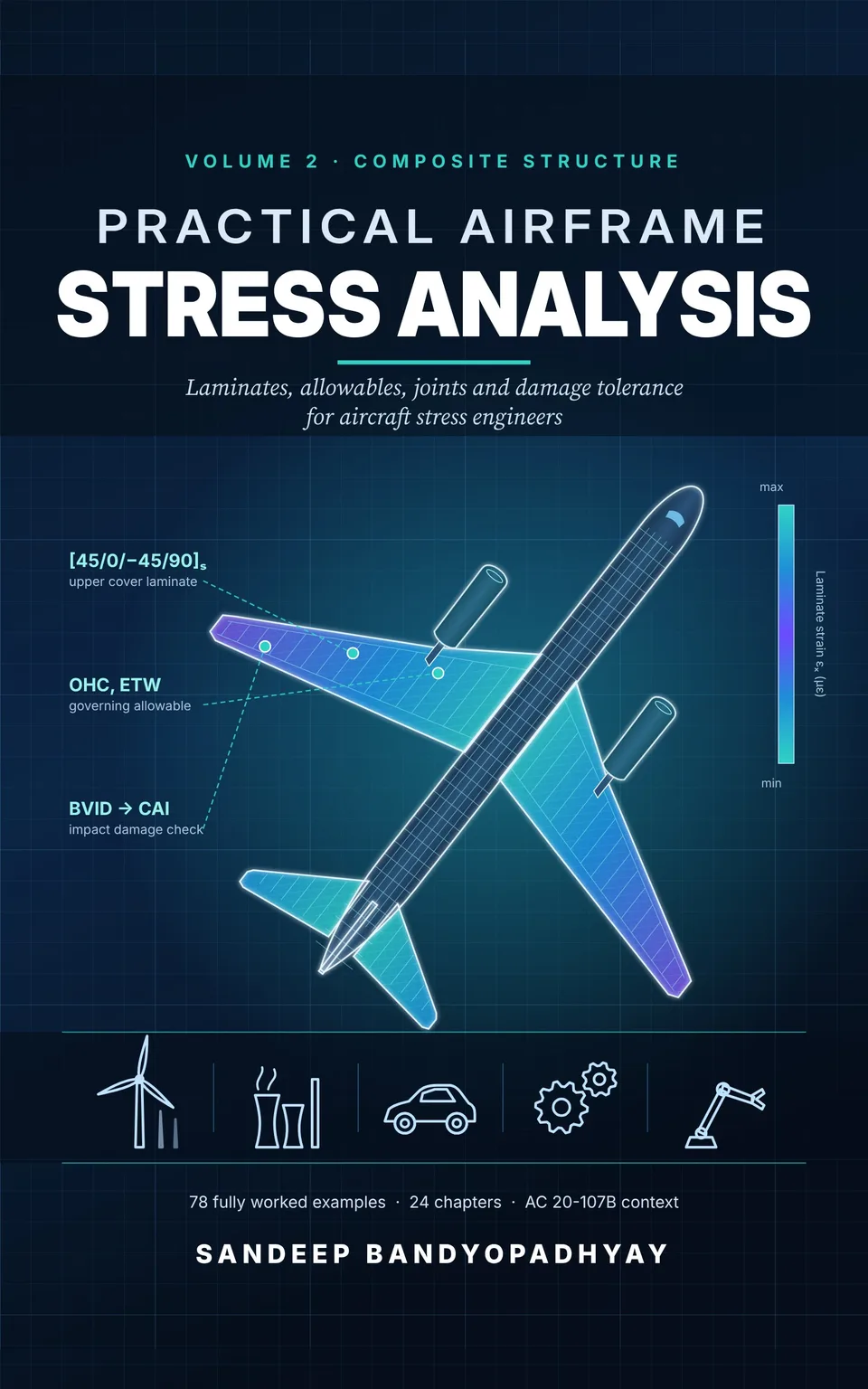
- Practical Airframe Stress Analysis, Volume 2: Composite Structure is free on Kindle for five days during the promotion.
The composite volume is free on Kindle for five days only, and we are already into them. If you have ever had a composite margin bounced in review, one of the three mistakes below is probably why.
Mistake one: using a coupon strength as the allowable
A test report gives a laminate strength, and it goes straight into the margin. The trouble is that a coupon tested dry at room temperature, undamaged, is the most optimistic number the material will ever produce. Between that coupon and a design value sit the hot-wet environment, which knocks down the matrix-dominated properties, the barely visible impact damage the structure must tolerate, and the statistical basis of the allowable. The building-block approach exists to carry a number from coupon to element to component with each of those effects accounted for. Volume 2 walks through that pyramid and shows which step a given margin should draw from.
Mistake two: sizing a bolted carbon joint like an aluminium one
Metallic joint methods treat bearing and net-section tension as separate checks. In a composite laminate the two interact: the load a fastener reacts in bearing and the load that bypasses the hole together decide when the joint fails, and the combination can be critical even when each check alone passes. Fastener load sharing in a multi-row joint is also different, because the laminate’s stiffness and the fastener’s flexibility change how much each row picks up. The joint chapters cover bolted, bonded and hybrid metal-to-composite joints with worked examples of exactly this interaction.
Mistake three: treating the laminate as one material
It is tempting to give a laminate a single modulus and move on. Two laminates with the same plies in a different order can have the same in-plane stiffness and quite different bending stiffness, and a coupling term that makes a flat panel twist or warp under load. Classical laminate theory, with its in-plane, coupling and bending matrices, is how the stress office keeps that honest. The book starts there and keeps the theory only as far as the analysis needs it.
How to use the free copy this week
Pick the mistake that cost you most recently and read that chapter first. Then take one margin from your own work, real or practice, and redo it with the book’s example beside you: check which allowable it used, whether the joint check considers bypass, and whether the laminate was treated as one material. One margin redone carefully teaches more than a chapter skimmed, and it shows quickly whether the book belongs on your desk.
What else is in Volume 2
The 24 chapters carry 78 worked examples, each taken to a margin. After laminates, failure criteria and allowables, they move through joints, impact damage and compression after impact, fatigue and repairs, and finish with the composite stress report and certification package. Methods come from public sources and material values are illustrative.
All four books in the promotion
-
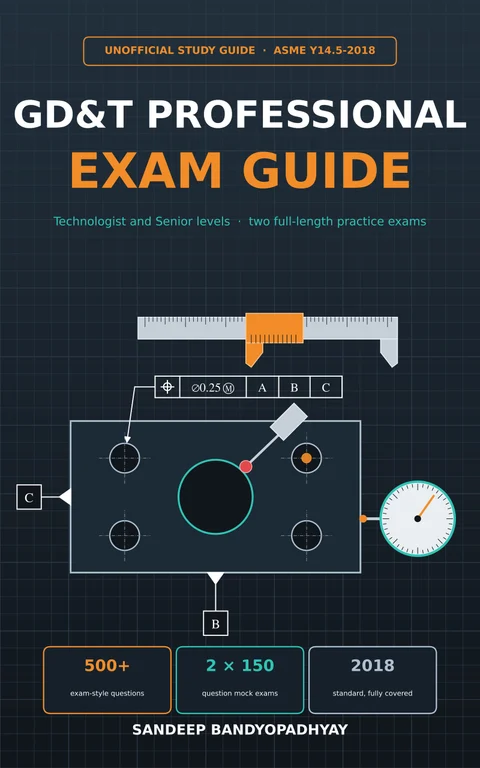 GD&T Professional Exam Guide Get it free on Kindle Kindle ebook on Amazon
-
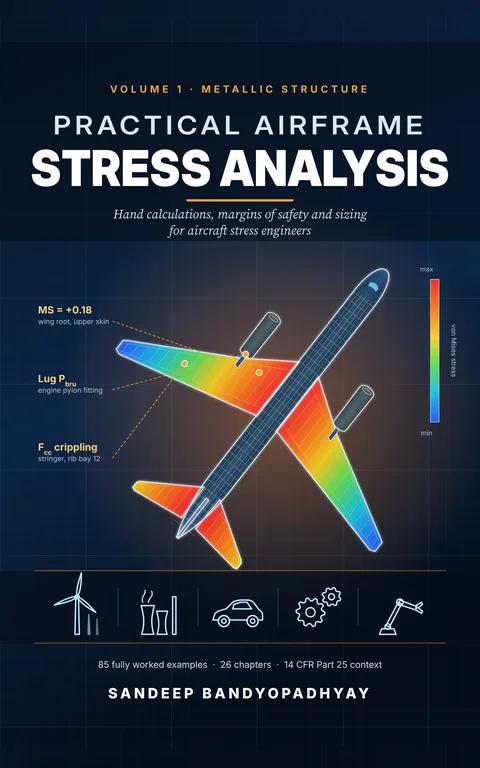 Practical Airframe Stress Analysis, Vol. 1 Get it free on Kindle Kindle ebook on Amazon
-
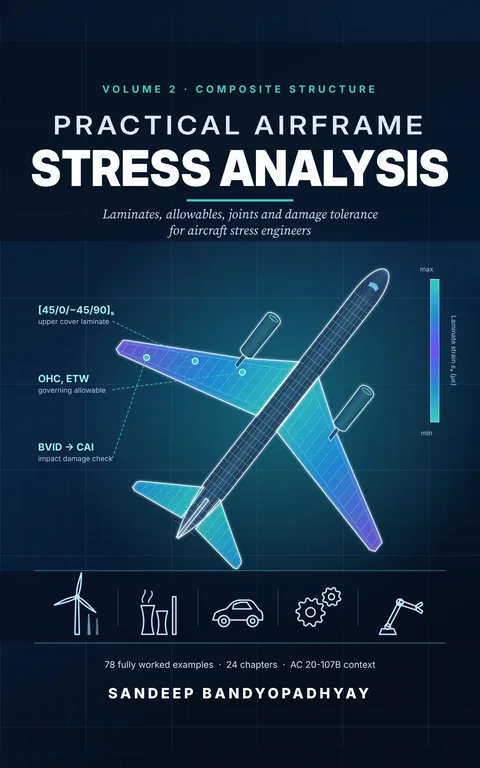 Practical Airframe Stress Analysis, Vol. 2 Get it free on Kindle Kindle ebook on Amazon
-
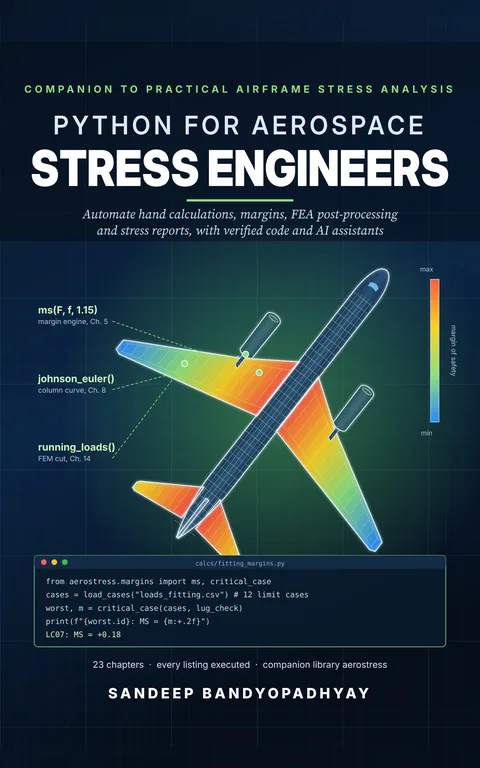 Python for Aerospace Stress Engineers Get it free on Kindle Kindle ebook on Amazon
Read more
The book’s card, the paperback and the free reader’s companion are on the books page. The earlier post on Volume 2 in the promotion and every other post of this promotion are on the announcements page.
Frequently asked questions
Is Volume 2 useful without Volume 1?
Yes. It stands on its own. Volume 1 covers metallic structure and is free on Kindle during the same promotion.
Is the Kindle ebook really free?
Yes, for the five days of the promotion, in every Amazon store that sells Kindle ebooks. It then returns to its paid price; the paperback keeps its normal price.
Does it stay in my library?
Yes. Once you download it, it stays in your Kindle library, and nothing is asked in return.
- #composites
- #laminates
- #bolted joints
- #allowables
- #Kindle
Get new articles by email
New exam guides, changes to exam dates and fees, and new practice-test certifications. One short email a day at most, only when there is something new.
Was this helpful?
Related articles
Airframe Stress Analysis Vol. 2: Free Kindle Promotion
The composite volume of Practical Airframe Stress Analysis is free on Kindle for five days: laminates, allowables, joints, damage tolerance, 78 examples.
A Margin of Safety Worked Like a Checker Would Want It
One tension fitting, the Part 25 factors applied in the right order, and the margin a checker accepts. Airframe Stress Analysis Vol. 1 is free on Kindle.
What the GDTP Exam Tests That 2009-Era GD&T Books Miss
Symmetry and concentricity are gone from Y14.5-2018. What changed, one short example, and the GD&T exam guide free on Kindle for five days.
Comments
Comments are read by a person before they appear. How we moderate.